
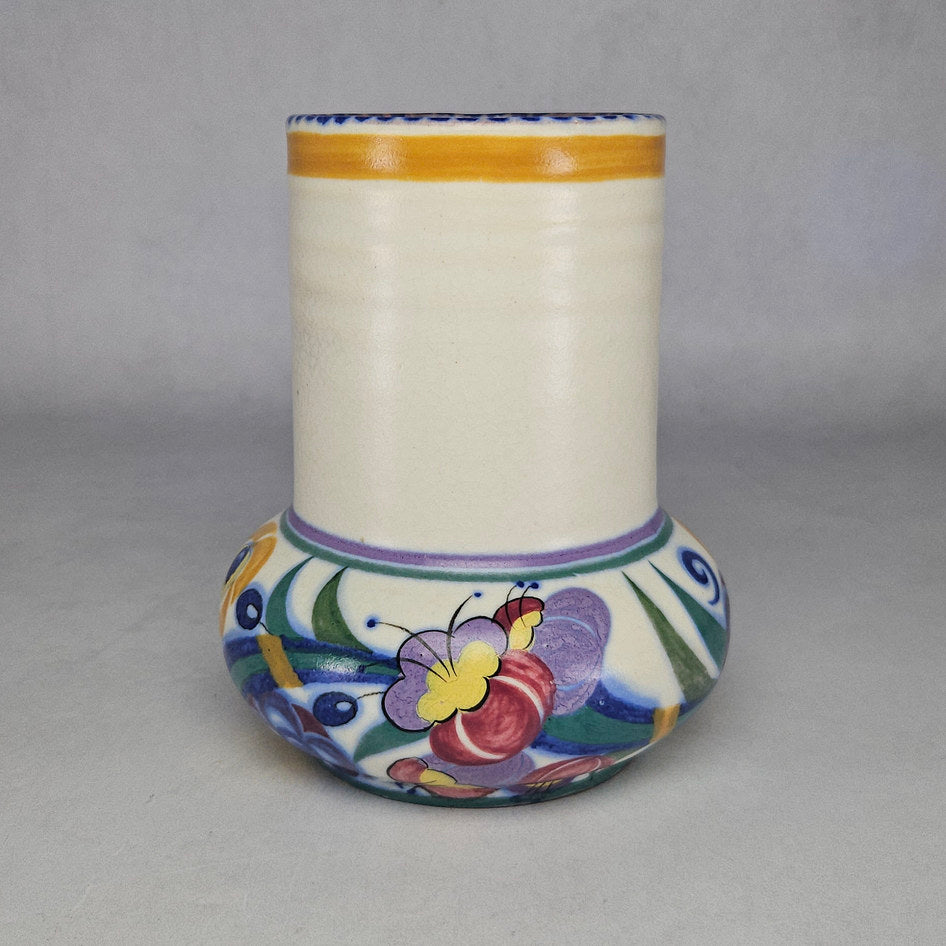
Poole Pottery is one of the most celebrated names in twentieth-century British studio ceramics. Based in Poole, Dorset, the pottery developed a distinctive aesthetic during the Carter, Stabler and Adams (CSA) years that remains the most actively collected period of its output. For collectors, Poole offers a combination of strong design identity, documented paintress marks, and the particular pleasure of collecting hand-decorated earthenware that was made with genuine artistic ambition.
A Brief History of Poole Pottery
The pottery at Poole was established by Jesse Carter in 1873, initially producing architectural and decorative tiles. The business was transformed in 1921 when Harold Stabler and John Adams joined the firm, creating the Carter, Stabler and Adams partnership that gave the pottery its distinctive artistic direction. The CSA years, broadly from 1921 to the 1950s, are the most celebrated period of Poole's output, characterised by hand-thrown earthenware decorated by a team of skilled paintresses working from pattern sheets designed by the studio's artists.
The pottery continued to develop through the 1950s and 1960s, producing the freehand painted pieces of the Contemporary range that are also actively collected. Later production, including the Delphis range of the 1960s and 1970s, represents a further distinct collecting category.
The CSA Aesthetic
The characteristic CSA Poole aesthetic combines hand-thrown earthenware forms with stylised floral, foliate, and geometric decoration in a palette of soft, muted tones: pink, grey, green, blue, and cream. The decoration was applied freehand by individual paintresses, each of whom used a personal mark on the base of pieces they decorated. This system of paintress marks is one of the most useful tools for collectors, allowing pieces to be attributed to specific decorators and cross-referenced against published records.
Paintress Marks and Pattern Codes
The Poole mark system is well documented. The base of a CSA piece typically carries the Carter, Stabler and Adams mark or the Poole England mark, a pattern code, and a paintress mark. The pattern code identifies the decorative design, while the paintress mark identifies the individual who decorated the piece. Published references, particularly Leslie Hayward's definitive study of the pottery, allow collectors to identify both the pattern and the paintress from the base marks alone.
Poole Pottery Pieces in the Collection
The Collectibles by Deon collection includes Poole Pottery pieces from the CSA and later periods. The Poole Pottery CSA Hand-Painted Vase with Paintress Mark is a characteristic example of the CSA period, with the stylised floral decoration and muted palette that define the most collected Poole aesthetic. The Poole Pottery Freehand Painted Contemporary Vase represents the later freehand painted tradition. Browse the Ceramics collection for all currently available Poole pieces.
What to Look For When Collecting
When assessing a Poole piece, begin with the base. Identify the mark period, the pattern code, and the paintress mark. Then assess the quality of the hand-painted decoration: the best CSA pieces have confident, fluid brushwork with clean colour application and well-balanced composition. The earthenware body should be sound, with no cracks or significant chips. Minor crazing is common and acceptable in vintage earthenware.
Further Reading
For collectors wishing to deepen their knowledge of the CSA period, the definitive reference is Poole Pottery: Carter and Company and Their Successors 1873-1995 by Leslie Hayward, which documents the full history of the pottery, including paintress marks and pattern codes.
Browse the full Ceramics collection and New Arrivals at Collectibles by Deon, or contact us if you are looking for a specific Poole Pottery piece. You can also learn more about the store.
Dating and Comparing Poole Pieces
Collectors often compare a Poole piece with other examples before assigning a date. The form, glaze palette, pattern code, paintress mark, and wording of the backstamp can all provide clues. A reference book is useful, but clear photographs of the base and decoration are equally important when seeking an attribution.
CSA pieces have a hand-finished quality that should be visible in the brushwork. Later Contemporary and Delphis pieces have their own design language and should not be judged as if they were CSA wares. Understanding these differences helps a collector build a focused group rather than treating all Poole pottery as one uniform category.
Display and Care
Poole pottery is especially effective in a cabinet or on open shelving where the decoration can be seen from several angles. Keep pieces stable and avoid stacking painted surfaces. Dust with a soft cloth rather than using abrasive cleaners, and do not place an earthenware piece in a dishwasher or expose it to sudden heat.
The pleasure of collecting Poole lies in the combination of form, decoration, and human involvement. A good piece shows not only what the pottery produced, but also how an individual decorator interpreted the design.
A collector may also choose to study Poole through its decorators. The paintress mark gives a hand-painted object an individual connection that factory production can otherwise conceal. Comparing several pieces by one decorator can reveal recurring brushwork, colour preferences, or ways of handling a pattern. These small observations are part of what makes Poole so rewarding beyond its immediate decorative appeal.