
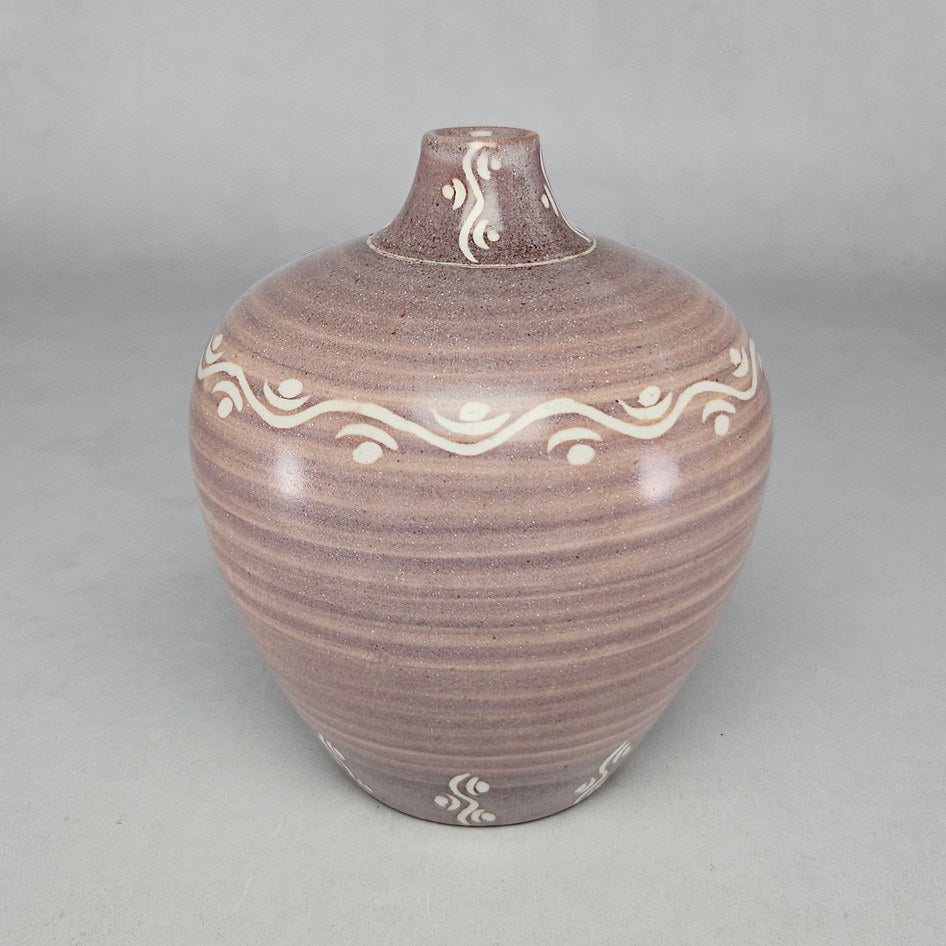
Warm, textured, and full of English pottery character, this Clayburn Staffordshire vase is a quietly distinguished piece for the discerning collector.
With its rounded form, narrow neck, softly mottled brown-pink glaze, and cream-coloured scroll and foliate-style decoration, the vase has a handmade decorative presence that feels both modest and refined. It is a piece that speaks to the charm of mid-twentieth-century Staffordshire ceramics, where hand decoration, glaze variation, and practical ornamental forms came together beautifully.
Marked Clayburns Staffordshire England, this vase belongs to the short-lived Clayburn pottery story, making it especially interesting for collectors of English decorative pottery, Staffordshire ceramics, and hand-decorated mid-century wares.
What Is Clayburn Staffordshire Pottery?
Clayburn Pottery was a small Staffordshire pottery concern based in Hanley, Stoke-on-Trent, during the 1950s. Although it did not operate for many years, its wares have developed collector interest because of their decorative quality, handmade feel, and close connection to the wider Staffordshire pottery tradition.
Clayburn is known for decorative wares rather than large-scale tableware services. Pieces associated with the name include vases, lamp bases, bowls, jugs, cruet sets, and related ornamental ceramics. Many Clayburn pieces have an appealing mid-century character, combining simple forms with hand decoration, textured surfaces, strong glaze effects, and designs that complement the broader decorative taste of the 1950s.
A Brief History
Clayburn Pottery was established in 1953 and operated from Milner Street, Hanley, in Stoke-on-Trent. The pottery was founded by William Lunt, who was also connected with Midwinter, one of the important Staffordshire pottery names of the period. Roy Midwinter was also associated with the company, and Clayburn wares were often intended to sit alongside or complement Midwinter's decorative output. This connection gives Clayburn pieces additional interest for collectors who enjoy mid-century Staffordshire design.
Clayburn was a short-lived business and had ceased trading by around 1960. This short production period is one of the reasons its pieces are less often encountered today than wares from larger, longer-running Staffordshire factories, and one of the reasons they appeal to collectors who enjoy the more specialised end of English pottery.
The Design of This Vase
This vase has a rounded body with a narrow neck, giving it a balanced and pleasing profile. The glaze is softly mottled in brown-pink tones, with subtle variation across the surface that gives the vase a warm, earthy quality. The ribbed body adds texture and movement, catching the light and emphasising the rounded form.
Cream-coloured scroll and foliate-style motifs provide contrast against the mottled glaze. These decorative details appear around the shoulder, neck, and lower body, adding rhythm without overwhelming the shape. The overall effect is calm, tactile, and decorative.
Why Collectors Appreciate Clayburn
- A short and specific production history: Clayburn was not a large, long-running pottery, so its wares have a more specialised collector identity. Pieces are less commonly encountered, which adds to their appeal.
- Connection to mid-century Staffordshire design: the relationship with Midwinter gives the pottery added context, particularly for collectors who enjoy 1950s English ceramics and the more design-led side of Staffordshire production.
- Hand-decorated charm: rather than feeling overly formal, Clayburn pieces have warmth and individuality. This makes them easy to live with and appealing to collectors who prefer ceramics with visible surface character.
What to Look For
- The mark: a clear Clayburn or Clayburns Staffordshire England mark helps confirm the identification and adds interest to the piece.
- Surface decoration: Clayburn pieces are often appreciated for their handmade or hand-decorated character. Glaze variation, incised-style detail, painted motifs, and surface texture are all important parts of the appeal.
- Condition: assess condition through clear photographs of the rim, neck, body, base, and maker's mark.
How to Style a Clayburn Vase
This Clayburn Staffordshire vase is very easy to style because of its warm and neutral tones. It can be displayed on a wooden sideboard, bookshelf, mantelpiece, or collector's shelf. The brown-pink glaze pairs beautifully with warm wood, cream ceramics, studio pottery, brass, books, and natural textures.
The rounded form makes it suitable as a standalone decorative piece. It also works well in a grouped ceramic display alongside other English pottery, mid-century ceramics, or mottled glaze pieces for a collected and layered look. You may also enjoy our Ceramics collection and Ceramic Vases collection for similarly characterful English pottery.
View this vase in the shop: Clayburn Staffordshire Mottled Brown Studio Pottery Vase. Browse the full Ceramics collection and Ceramic Vases collection, or contact us with any questions.
Collecting Short-Lived Potteries
Clayburn illustrates why short production histories can make a pottery rewarding to study. The pieces are not defined only by rarity. Their appeal also comes from the way they record a particular moment in Staffordshire design, when practical forms, textured glazes, and mid-century decoration were being explored together.
When comparing Clayburn with related Midwinter wares, consider the mark, the glaze treatment, the form, and the quality of the hand decoration. A small group of pieces can show how different factories approached similar ideas without losing the individuality of each maker.
The About Us page introduces Collectibles by Deon.