
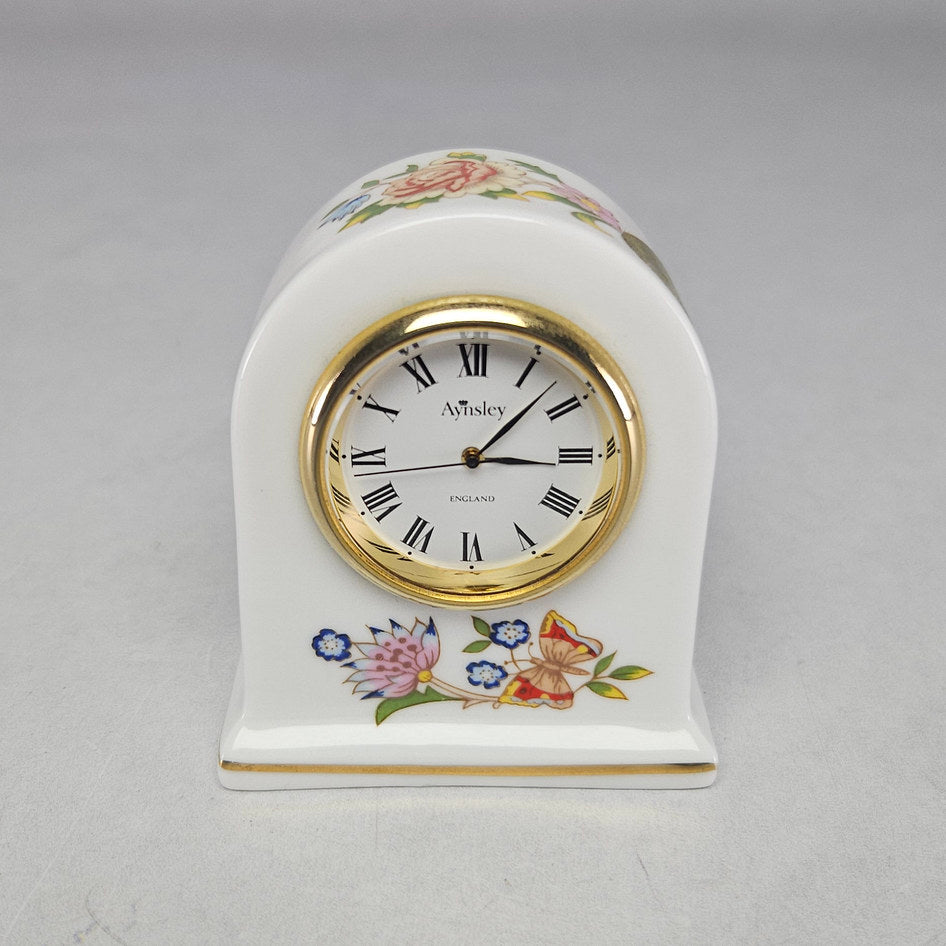
Aynsley bone china has been produced in Longton, Staffordshire, since 1775, making it one of the oldest continuously operating bone china manufacturers in England. For collectors, Aynsley offers a combination of historical depth, distinctive pattern design, and the particular pleasure of collecting fine English bone china that was made to be used and enjoyed rather than simply displayed.
A Brief History of Aynsley
The Aynsley factory was established by John Aynsley in Longton in 1775. The factory remained in family ownership until 1969, when it was acquired by Waterford Wedgwood. Through the nineteenth and twentieth centuries, Aynsley developed a reputation for high-quality bone china tableware and gift pieces, with a particular strength in hand-painted fruit, bird, and floral decoration. The factory's painters, some of whom signed their work, are among the most celebrated in the English bone china tradition.
The Pembroke Pattern
Pembroke is the most widely collected Aynsley pattern, featuring a painted bird and floral motif with a richly gilded border. The pattern was produced across a wide range of tableware forms, including cups and saucers, plates, teapots, cream jugs, sugar bowls, and serving pieces. Pembroke pieces are the most commonly encountered Aynsley items in the South African market, reflecting the pattern's popularity during the peak of Aynsley's export trade.
The Ceramics collection at Collectibles by Deon includes a selection of Aynsley Pembroke pieces. The Aynsley Pembroke Bone China Teacup and Saucer is a classic example of the pattern in its most familiar form. The Aynsley Pembroke Bone China Cream Jug and the Aynsley Pembroke Bone China Sugar Bowl are the core serving pieces that complete a Pembroke tea service. The Aynsley Pembroke Bone China Side Plate and the Aynsley Pembroke Bone China Dinner Plate extend the pattern into tableware. For collectors building a Pembroke service, the Aynsley Pembroke Bone China Teapot is the centrepiece piece most actively sought.
Cottage Garden and Orchard Gold
Cottage Garden and Orchard Gold are the other two most actively collected Aynsley patterns. Cottage Garden features a painted floral bouquet in soft pinks, blues, and greens, with a gilded border. Orchard Gold features hand-painted fruit, typically including peaches, plums, and berries, with a rich gilded border. Both patterns were produced across the same range of tableware forms as Pembroke and are found regularly in the South African market.
Signed Aynsley Pieces
Aynsley pieces signed by named painters are among the most sought after by collectors. The factory employed skilled painters who signed their work on the painted panel itself, typically with a surname or initials. Signed fruit and bird panels by painters such as D. Jones, N. Brunt, and others command premiums over unsigned examples of the same pattern. When a signed piece is available, the signature should be clearly noted in the description.
What to Look For When Collecting
The Aynsley backstamp has changed over the decades, and the style of the mark provides useful dating information. "England" in the mark indicates post-1891 production. "Bone china" in the mark indicates production from approximately 1945 onward. "Fine bone china" and pattern names in the mark are associated with mid to late twentieth-century production. For more precise dating, cross-reference the mark against Godden's Encyclopaedia of British Pottery and Porcelain Marks.
When assessing a piece, look at the quality and clarity of the hand-painted decoration, the richness and evenness of the gilded border, the condition of the bone china body, and the presence of a clear backstamp with pattern name. Gilding on Aynsley pieces can show wear at the rim and handle edges, which is normal for pieces that have been used. Significant gilding loss affects value.
Aynsley in South Africa
Aynsley bone china arrived in South Africa in significant quantities through the colonial period and continued to be imported through the twentieth century. It appears regularly at South African estate sales and auction houses, often as part of tea service dispersals. Complete sets are rare, but individual pieces and partial services are commonly found. The Pembroke pattern is the most widely encountered in the local market.
Browse the Ceramics collection at Collectibles by Deon for currently available Aynsley pieces, or explore the latest additions to see what has recently come in. For questions about specific patterns or pieces, visit our contact page or learn more about the store.
Frequently Asked Questions
When was Aynsley founded?
The Aynsley factory was established in Longton, Staffordshire, in 1775 by John Aynsley, making it one of the oldest continuously operating bone china manufacturers in England.
What is the most collected Aynsley pattern?
Pembroke is the most widely collected Aynsley pattern, featuring a painted bird and floral motif with a richly gilded border. Cottage Garden and Orchard Gold are also actively collected. In the South African market, Pembroke is the pattern most commonly encountered at estate sales and auction houses.
How do I date an Aynsley piece?
Check the backstamp for dating indicators. "England" in the mark indicates post-1891 production. "Bone china" in the mark indicates production from approximately 1945 onward. "Fine bone china" and pattern names in the mark are associated with mid to late twentieth-century production. For more precise dating, cross-reference the mark against Godden's Encyclopaedia of British Pottery and Porcelain Marks.
Are signed Aynsley pieces more valuable?
Yes. Aynsley pieces signed by named painters, particularly those with painted fruit, bird, or floral panels, are among the most sought after by collectors and command premiums over unsigned examples of the same pattern. The signature is typically found on the painted panel itself rather than on the base.
Is Aynsley still being made?
Yes. Aynsley bone china continues to be produced under the Aynsley name, though the range is considerably smaller than at the peak of production in the mid-twentieth century. The factory has passed through several owners since leaving family ownership in 1969.
A rewarding category for collectors of Aynsley bone china, English fine china, or vintage tea services. Browse the Ceramics collection to explore available pieces, or contact us to ask about specific patterns or marks. You can also learn more about the store.