
Burleigh Ware is one of the most enduring names in English Staffordshire pottery. Produced by Burgess and Leigh at the Middleport Pottery in Burslem, Stoke-on-Trent, Burleigh has been in continuous production since 1851, making it one of the longest-running potteries in the English ceramic tradition. For collectors, Burleigh offers a combination of historical depth, distinctive pattern design, and the satisfaction of collecting from a maker that is still active today.
A Brief History of Burgess and Leigh
The Middleport Pottery, where Burleigh Ware is still produced, was built in 1888 and is one of the best-preserved Victorian pottery factories in Britain. The building itself is a listed structure and a working museum of the English pottery industry. Burgess and Leigh developed their distinctive blue and white transferware patterns from the late nineteenth century onward, with the Willow and Calico patterns becoming their most recognised and enduring designs. The Burleigh name became the trading name for the pottery's decorative wares, and it is under this name that collectors most commonly seek out pieces.
The Patterns Collectors Look For
Willow is the most widely recognised Burleigh pattern, a version of the classic Blue Willow design that has been produced by English potteries since the late eighteenth century. Burleigh's Willow is distinguished by its crisp transferware printing and the quality of its cobalt blue. The Burleigh Ware Willow Blue and White Rectangular Handled Serving Tray is a characteristic example of the pattern in a practical serving form.
Calico is Burleigh's own original pattern, featuring a flowing blue and white design of stylised flowers and foliage. Calico is one of the most collected Burleigh patterns and is still in production today, making it possible to mix vintage and contemporary pieces in a single display.
Asiatic Pheasants is another long-running Burleigh pattern, featuring the distinctive pheasant and floral motif that was popular across many English potteries in the nineteenth and twentieth centuries.
Mid-Century Burleigh: The Starburst Range
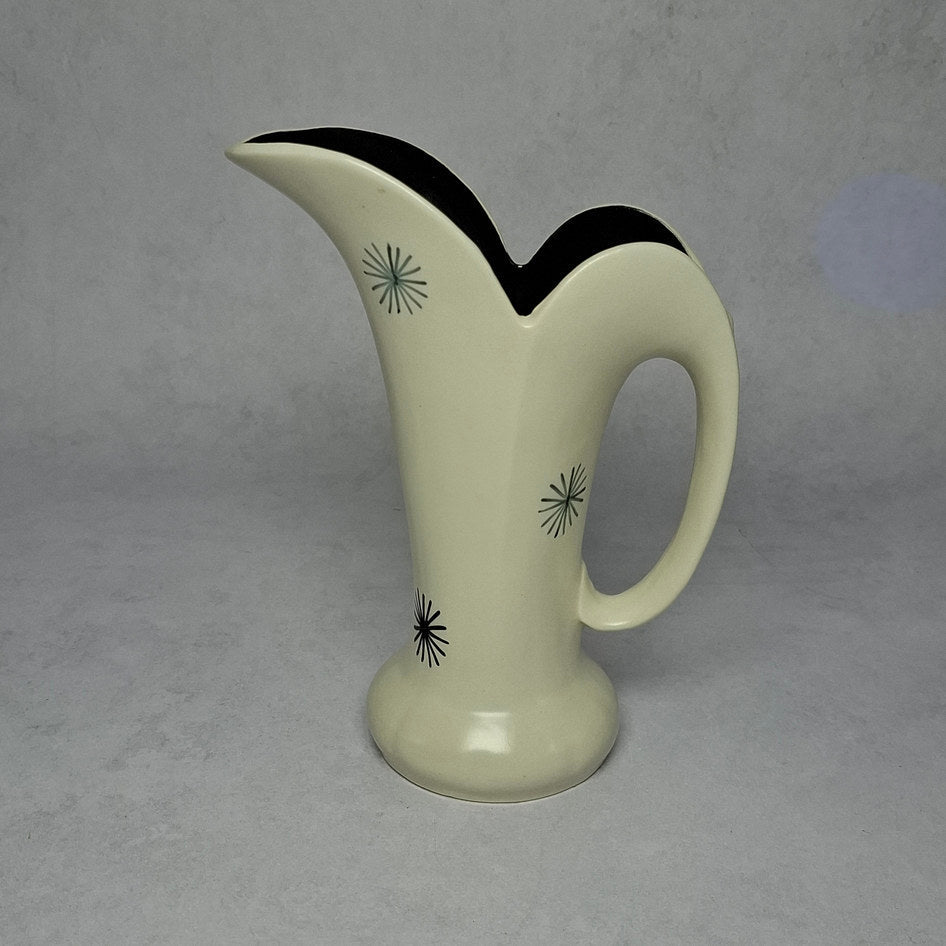
Beyond its transferware tradition, Burgess and Leigh also produced decorative earthenware in mid-century styles that reflect the design sensibility of the 1950s and 1960s. The Starburst range is among the most distinctive of these, featuring bold geometric atomic-age decoration in cream and black. The Vintage Burleigh Ware Starburst Cream and Black Ceramic Jug and the Vintage Burleigh Ware Starburst Cream and Black Ceramic Ewer are strong examples of this mid-century direction, appealing to collectors who enjoy the contrast between Burleigh's traditional transferware heritage and its more experimental decorative output. The Starburst pieces are less commonly encountered than the blue and white transferware and represent a distinct collecting category within the broader Burleigh range.
What to Look For When Collecting
Burleigh pieces are typically marked on the base with the Burgess and Leigh name, the Burleigh Ware mark, and often the pattern name. The mark has changed over the decades, and the style of the backstamp can help with approximate dating. Key points to assess when examining a piece include the clarity and sharpness of the transfer print, the depth and evenness of the cobalt blue, the condition of the glaze and body, and the presence of a clear backstamp with pattern name.
For mid-century pieces such as the Starburst range, look for the crispness of the geometric decoration, the contrast between the cream ground and the black pattern, and the condition of the glaze surface. These pieces were made for everyday use and show wear accordingly, so examples in good condition are worth seeking out.
Collecting Burleigh in South Africa
Burleigh Ware reached South Africa through British household imports and the general trade in English ceramics that supplied the colonial and post-colonial market. Blue and white transferware in particular was widely used in South African homes through the mid-twentieth century, and Burleigh pieces turn up regularly at estate sales and antique dealers. The Willow and Calico patterns are the most commonly encountered, while the mid-century decorative ranges such as Starburst are less frequently seen and attract collector interest when they do appear.
Browse the Ceramics collection at Collectibles by Deon for currently available Burleigh and English pottery, or explore the Blues and Whites collection for blue and white transferware across makers. See what has recently come in via the latest additions, or contact us with any enquiries. Learn more about the store and how each piece is sourced.
Marks and Production Quality
Burleigh marks can vary according to period and product range, so collectors should compare the wording, typography, and accompanying pattern information with reliable references. A clear mark does not replace condition assessment, but it gives a piece a stronger documented identity and helps separate vintage production from later reproductions.
The best Burleigh pieces combine crisp printing with a sound earthenware body. Look closely at handles, rims, spouts, and foot rings, as these areas show use most readily. Crazing may be part of the age and character of a piece, while chips, cracks, and repairs should be noted before purchase.