
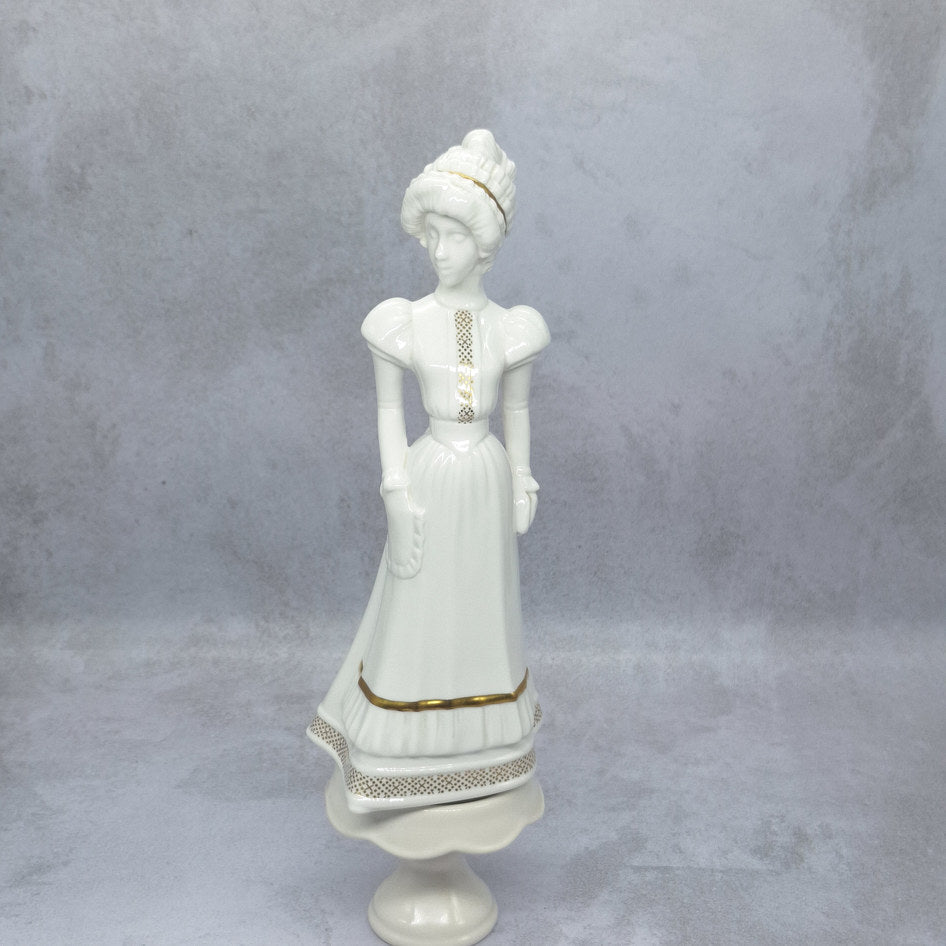
English lady figurines have a special charm. They bring together fine ceramic workmanship, fashion history, hand-painted detail and the elegance of English porcelain and bone china. For collectors, these figurines are more than pretty ornaments. They represent some of the best-loved names in British ceramics, including Royal Doulton, Coalport, Spode and Royal Worcester. Each maker approached lady figurines in its own way, which makes them wonderful to collect, compare and display together. At Collectibles by Deon, these figures fit beautifully into a curated collection of fine porcelain, decorative ceramics and timeless English collectables. Browse the Figurines collection to see current pieces.
Why lady figurines are so collectable
Lady figurines remain popular because they combine beauty with storytelling. A single figure can suggest a whole world: a ballroom, a garden, a Victorian parlour, a fashionable afternoon, a historical costume or a quiet moment of elegance. The flowing gowns, painted faces, hats, fans, flowers and delicate poses all add to the appeal. Collectors enjoy them because they are decorative, recognisable and easy to display. They can be collected by maker, series, colour, dress style, period costume, designer or personal preference. They also offer a pleasing way to collect British ceramic history across several factories rather than focusing on only one name.
Royal Doulton lady figurines
Royal Doulton is perhaps the most famous name in English figurine collecting. The company's HN figurine series began in 1913, and the HN number remains one of the most useful identification details for collectors. Many Royal Doulton figures have the figure name and HN number printed or handwritten on the base. Royal Doulton lady figurines are loved for their graceful modelling, expressive faces and wide range of subjects. Early examples often have strong collector interest, especially when the figure is in excellent condition and has a clearly readable base.
Popular collecting areas include early HN figures, Art Deco ladies, crinoline ladies, Pretty Ladies, historical costume figures and limited edition pieces. Royal Doulton figures often feel theatrical. They have movement, costume detail and personality, making them strong focal points in a display cabinet.
The collection at Collectibles by Deon includes a strong selection of Royal Doulton ladies. Paisley Shawl HN1988 is a classic historical costume figure with a richly detailed shawl and period dress. Lavinia HN1955 and Mandy HN2476 represent the softer romantic style that became popular in later decades. Andrea HN3058, shown in a pale blue gown with a small white cat, captures the gentle charm that defines the best Royal Doulton figure work. Valerie HN2107 and Peggy HN2038 are charming smaller figures that suit cabinet display beautifully, while the miniature Priscilla M24 is a fine example of the M series, which is especially popular with collectors who enjoy smaller-scale pieces. Lily is a delicate floral figure that pairs naturally with other flower-themed pieces in a display.
Coalport lady figurines
Coalport has a long history in English porcelain and is closely associated with elegant bone china. For many modern collectors, Coalport lady figurines are especially linked with the Ladies of Fashion series. These figures are hand-painted bone china pieces, often showing women in flowing dresses, evening gowns, formal poses and fashionable costume. Coalport ladies tend to have a softer decorative quality than some Royal Doulton figures. They are elegant, colourful and highly displayable, often with romantic names and graceful dress shapes.
The Ladies of Fashion range is popular because it is easy to build into a collection. Some collectors look for favourite names, while others collect by colour, dress style or series. Because the range is discontinued, good condition examples remain attractive to collectors, especially when they retain strong colour, clean glaze and undamaged details. The collection includes Margaret, a classic Ladies of Fashion piece with the graceful pose and flowing dress that defines the series, and Josephine, modelled by Martin Evans, which shows the refined figure work that Coalport brought to its bone china ladies.
Spode lady figurines
Spode is best known for tableware, transfer printing and bone china, but it also has a place in figurine collecting. Josiah Spode helped develop underglaze transfer printing and was closely associated with the development of bone china in the late 18th century. This gives the Spode name strong historical weight among ceramic collectors. Spode lady and figure pieces are generally quieter and more restrained than the highly coloured Royal Doulton and Coalport figures. Many are seen in white bone china, where the beauty comes from form, modelling and silhouette rather than painted colour.
This makes Spode figures especially appealing to collectors who enjoy a cleaner, sculptural look. They can display beautifully in modern interiors because the white bone china finish feels fresh, simple and elegant. Spode figurines are also useful in a mixed lady figurine display because they add contrast. A white Spode figure can soften a display of colourful gowns and create balance among richer pieces. The Spode Sarah Bone China Lady Figurine by Pauline Shone is a fine example of this restrained elegance, with its clean white finish and graceful modelling showing exactly what makes Spode figure work so distinctive.
Royal Worcester lady figurines
Royal Worcester is one of the most historic names in English porcelain, with origins in the 18th century. Royal Worcester lady figurines are admired for their delicate finish, refined modelling and strong connection to fine porcelain tradition. The factory is also known for detailed backstamps, with many marks helping collectors date or identify pieces more accurately. Royal Worcester produced many decorative figures over time, including ladies in period dress, romantic subjects, seasonal figures, childhood studies, ballet-related subjects and historical costume pieces. These figures often have a refined, elegant character. They are less about bold drama and more about porcelain quality, soft colour and graceful modelling.
The Royal Worcester Grandmother's Dress Figurine by F.G. Doughty is a charming example of the Royal Worcester figure tradition. Freda Doughty was one of the factory's most celebrated modellers, known for her childhood and figure studies, and this piece shows the warmth and delicacy that made her work so enduring. Collectors should always check the base carefully, as Royal Worcester marks can provide useful information about the period, model and sometimes production details.
Continental and Spanish porcelain figurines
The figurine tradition extends well beyond English makers. Continental European factories, particularly in Spain and Italy, produced decorative porcelain figures of considerable quality. The Giuseppe Armani Capodimonte Flamenco Dancers Porcelain Figurine is a striking example of Italian figurine work in the Capodimonte tradition, with its dynamic composition and detailed hand-painted decoration. The D'Art and A Girl with Cat Spanish Porcelain Figurine represents the Spanish studio porcelain tradition, with a charming subject and careful modelling. The Nao Spain White Porcelain Duckling Figurine is from Nao, the sister brand of Lladro, and shows the refined white porcelain work for which Spanish figurine makers are known.
Decorative figurines and wall pockets
Beyond the named figurine makers, the broader decorative ceramics tradition includes a range of figurative pieces that appeal to collectors of lady figures and ornamental ceramics. The Ivory Glazed Ceramic Lady Head Wall Pocket Vase is a characteristic mid-century decorative piece, combining the lady head motif with the wall pocket form that was popular in British and American homes from the 1930s through the 1960s. The Light Blue Mottled Ceramic Elephant Figurine represents the broader animal figurine tradition that sits alongside lady figures in many collector displays.
How these makers differ
Although Royal Doulton, Coalport, Spode and Royal Worcester all produced collectable lady figures, their styles are not identical. Royal Doulton often feels theatrical, expressive and highly characterful. Coalport often feels romantic, colourful and fashion-focused. Spode can feel more sculptural, restrained and elegant, especially in white bone china. Royal Worcester often feels refined, delicate and closely tied to the long English porcelain tradition. Displaying them together creates a very interesting comparison. The collector can see how different factories interpreted elegance, costume, pose and femininity through ceramic form.
What to look for when collecting
When collecting English lady figurines, always begin with the base. Look for the maker's mark, model name, number, series name, designer, edition number or other identifying details. These marks can help confirm the maker and sometimes help with dating. Condition is very important. Check carefully for chips, cracks, restoration, crazing, paint loss, rubbed gilding, damaged fingers, broken flowers, hat or fan damage, and repairs to necks, arms or dress edges. Small details can be vulnerable, especially flowers, hands, fingers, fans, lace edges and raised dress details. A figurine in excellent condition will usually be more desirable than one with visible damage or restoration.
Are lady figurines rare?
Not all English lady figurines are rare. Many Royal Doulton, Coalport, Spode and Royal Worcester figures were produced in collectable ranges and can still be found on the secondary market. However, some pieces are less commonly encountered and may be more desirable. Collector interest can be stronger for early examples, retired or discontinued pieces, limited editions, figures with original boxes and certificates, excellent condition examples, unusual colourways, less common models, prestige or larger figures, and figures by well-known designers. It is best to use the word rare carefully. If rarity cannot be verified, safer wording includes collectable, sought after, discontinued, early example, limited edition where confirmed, or less commonly encountered.
Why collectors enjoy grouping different makers
A mixed display of lady figurines can be more interesting than a single-maker collection. Royal Doulton adds character and history. Coalport adds colour and fashion. Spode adds sculptural calm. Royal Worcester adds refinement and porcelain tradition. Together, they create a display that tells a broader story of English ceramic figure making. This approach is also practical for collectors. Instead of waiting for only one maker or one series, a collector can build a beautiful display around a shared theme: elegant women in porcelain and bone china.
Styling English lady figurines at home
Lady figurines display best where their detail can be seen clearly. A glass cabinet is ideal because it protects the figures from dust and accidental damage. A sideboard, mantel or bookshelf can also work well if the figures are arranged carefully and not overcrowded. For a balanced display, group figures by height, colour or maker. A tall figure can anchor the centre, while smaller figures sit around it. The white Spode Sarah can be placed between colourful Royal Doulton or Coalport pieces to create breathing space, while the miniature Priscilla M24 works beautifully at the front of a tiered display. They pair well with fine bone china, floral ceramics, crystal, silverplate, vintage mirrors, decorative trays, small framed prints and English teaware. The aim is to let each figure be seen and appreciated.
A collection with lasting charm
Royal Doulton, Coalport, Spode and Royal Worcester lady figurines all bring something different to a collection. They show how English ceramic makers used porcelain and bone china to capture fashion, elegance, movement and character. Some figures are dramatic. Some are romantic. Some are quiet and refined. Together, they offer a rich and rewarding collecting field. For Collectibles by Deon, these figurines are ideal pieces to showcase because they connect maker history, decorative beauty and strong collector appeal. Whether displayed as a single figure or as part of a grouped collection, English lady figurines remain timeless, graceful and deeply collectable.
Explore the full Figurines collection and the Royal Doulton collection at Collectibles by Deon, or discover what has just arrived in the latest additions. For enquiries about specific figures or makers, visit the contact page or learn more about the store.