
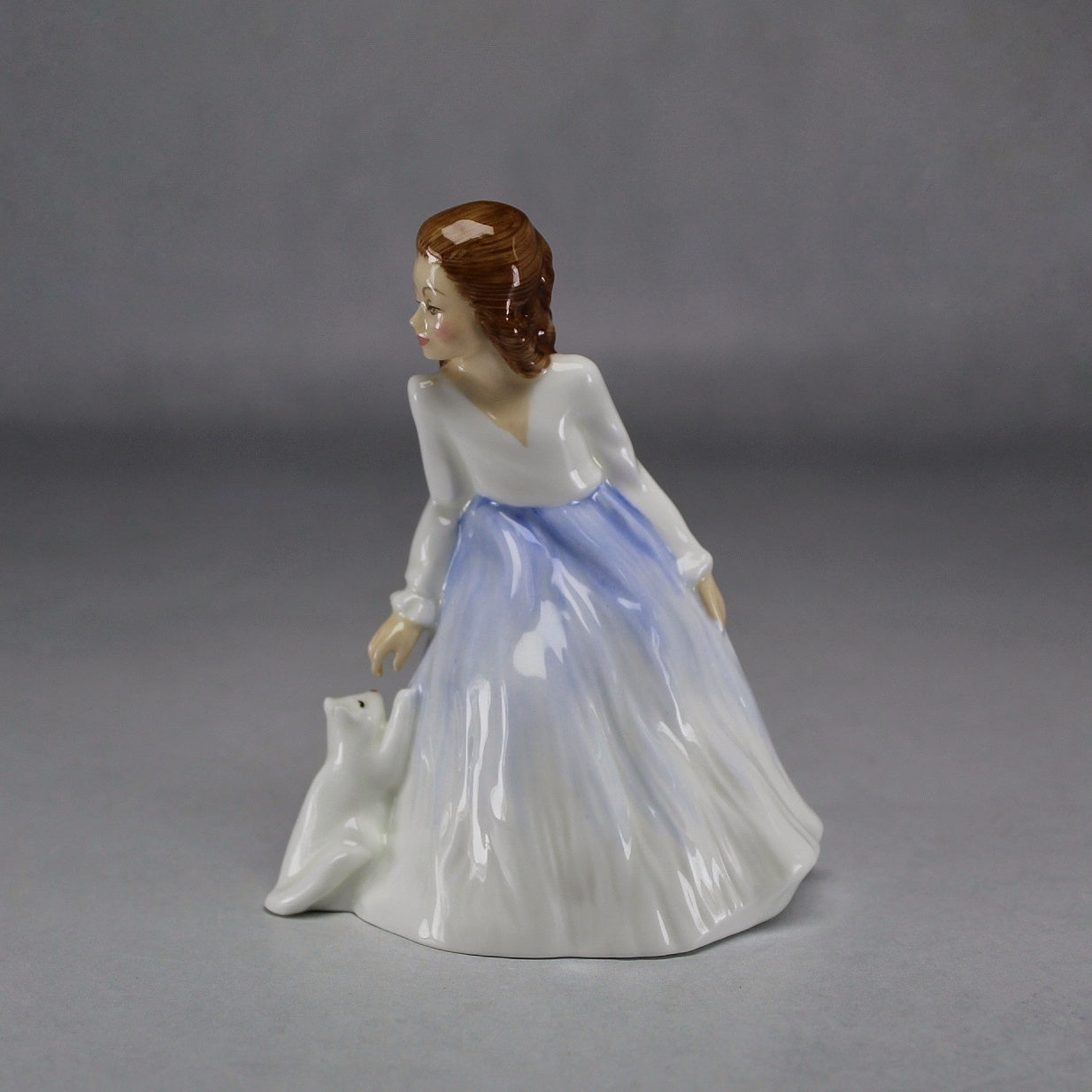
Royal Doulton lady figurines are among the most popular and recognisable areas of English ceramic collecting. Elegant, expressive and beautifully painted, these figures have been collected for generations by people who appreciate fine bone china, costume detail, period fashion and the long decorative history of Royal Doulton. Their appeal lies in variety. Some figures show grand historical dress, others capture the glamour of the 1920s and 1930s, while later examples focus on romance, flowers, seasons, birthdays and elegant display. This makes them accessible to both new collectors and more experienced buyers. Browse the Royal Doulton collection to see current examples.
The early Royal Doulton figures
Royal Doulton introduced its HN figure numbering system in 1913. The HN number is one of the most important identification details on a Royal Doulton figurine, because it helps confirm the model, title, design and approximate production period. Early HN figures are especially interesting to collectors. They were often produced in smaller numbers than many later pieces, and some show more experimental modelling, colouring and subject matter. Early female and lady-related subjects include figures such as Elizabeth Fry HN2, Milking Time HN3, Picardy Peasant female versions, The Crinoline variants, The Coquette and early historical ladies. These early pieces are often more desirable when the base markings are clear, the figure is in excellent condition and the colourway is a recognised early version.
Why Royal Doulton lady figurines are so popular
Royal Doulton lady figurines remain popular because they combine beauty, maker history and strong display appeal. Each figure has its own personality. Some are graceful and formal, some are romantic, some are theatrical and some are charmingly simple. The flowing dresses, painted faces, delicate hands, hats, flowers and gowns give the figures a sense of movement and character. A good example of this is Andrea HN3058, a beautifully modelled figure in a pale blue gown with a small white cat, capturing the gentle charm that makes Royal Doulton ladies so appealing. Collectors also enjoy the fact that Royal Doulton produced lady figures across many decades. A collection can focus on early figures, Art Deco ladies, crinoline ladies, Pretty Ladies, flower sellers, seasonal figures, limited editions or a favourite colour palette. They are also easy to display. A single lady figurine can add elegance to a shelf or cabinet, while a group creates a beautiful collector's display arranged by period, colour, designer or theme.
What to look for when collecting
When buying Royal Doulton lady figurines, always start with the base. Look for the Royal Doulton backstamp, the HN number, the figure title if present, and any artist, painter or edition details. The HN number is particularly useful because it helps identify the exact model. Condition is very important. Check carefully for chips, cracks, restoration, crazing, paint loss, missing flowers, damaged fingers, rubbed gilding or repairs to hats, arms, necks and dress edges. The delicate areas are often where damage occurs first. Also look at the quality of the painting. Clean facial detail, strong colour, good glaze and crisp modelling all add to the appeal of a figure. Original boxes and certificates can add interest, especially for later limited edition pieces.
Designers and styles collectors enjoy
Several designers are strongly associated with Royal Doulton figures. Leslie Harradine is especially important for his stylish and expressive figures, including many Art Deco and fashionable lady subjects. Other designers and modellers also contributed to the long Royal Doulton figure tradition. Collectors often focus on particular styles. The Paisley Shawl HN1988 is a classic example of the historical costume style, with its richly detailed shawl and period dress. Lavinia HN1955 and Mandy HN2476 represent the softer, more romantic style that became popular in later decades. Valerie HN2107 and Peggy HN2038 are charming smaller figures that suit cabinet display beautifully. The miniature Priscilla M24 is a fine example of the M series miniature figures, which are especially popular with collectors who enjoy smaller-scale pieces. A focused collection often feels stronger than a random grouping. A cabinet of Art Deco ladies creates a very different mood from a display of floral Pretty Ladies, and both approaches have their own appeal. Royal Doulton also produced figures beyond the lady tradition. The Mask Seller HN2103 is a well-known character figure, and the Brambly Hedge Lady Woodmouse DBH5 appeals to collectors who enjoy the charming Brambly Hedge series.
Rare and sought-after examples
Not every Royal Doulton lady figurine is rare. Many were produced for long periods and remain available on the secondary market. However, some figures are especially sought after because of age, design, limited production, size, prestige status or collector demand. Examples often regarded as rare or highly desirable include Princess Badoura HN2081, The Bather HN687, early Crinoline variants such as HN8 and HN9, early historical ladies such as A Lady of the Elizabethan Period HN40 and A Lady of the Georgian Period HN41, certain early or unusual colourways of A Victorian Lady, and selected limited edition or prestige figures with certificates and original boxes. Rarity should always be described carefully. A figure should only be called rare when the specific model, colourway, edition size or market availability supports that claim. Safer wording includes sought after, collectable, early example, limited edition where verified, or less commonly encountered.
How to display Royal Doulton lady figurines
Royal Doulton lady figurines display beautifully in a glass cabinet, on a mantel, on a bookshelf or as part of a curated porcelain grouping. They pair well with fine bone china, floral ceramics, crystal, silverplate, mirrors and other elegant decorative pieces. A group of figures can be arranged by colour, height or theme to create a balanced display. For a softer look, place lighter pastel figures together. Lily works beautifully alongside other floral-themed figures, while Andrea HN3058 in her pale blue gown pairs naturally with blue and white ceramics or delicate porcelain pieces. For a stronger collector's display, group early figures or Art Deco ladies separately so their period character stands out. Explore the Figurines collection for complementary pieces to display alongside them.
Why they remain worth collecting
Royal Doulton lady figurines remain worth collecting because they combine craftsmanship, history and charm. They are decorative, recognisable and deeply connected to the English ceramic tradition. For collectors, each figure offers a small story: a lady in period dress, a dancer, a romantic figure, a flower seller, a fashionable woman or a carefully modelled character from another era. At Collectibles by Deon, Royal Doulton lady figurines fit beautifully into a curated collection of fine porcelain, English ceramics and timeless decorative pieces. They are ideal for collectors who enjoy elegance, maker history and display pieces with lasting character.
Browse the full Royal Doulton collection at Collectibles by Deon, explore the Figurines collection, or discover what has just arrived in the latest additions.
The About Us page introduces Collectibles by Deon. Questions about the collection can be sent through the Contact page.