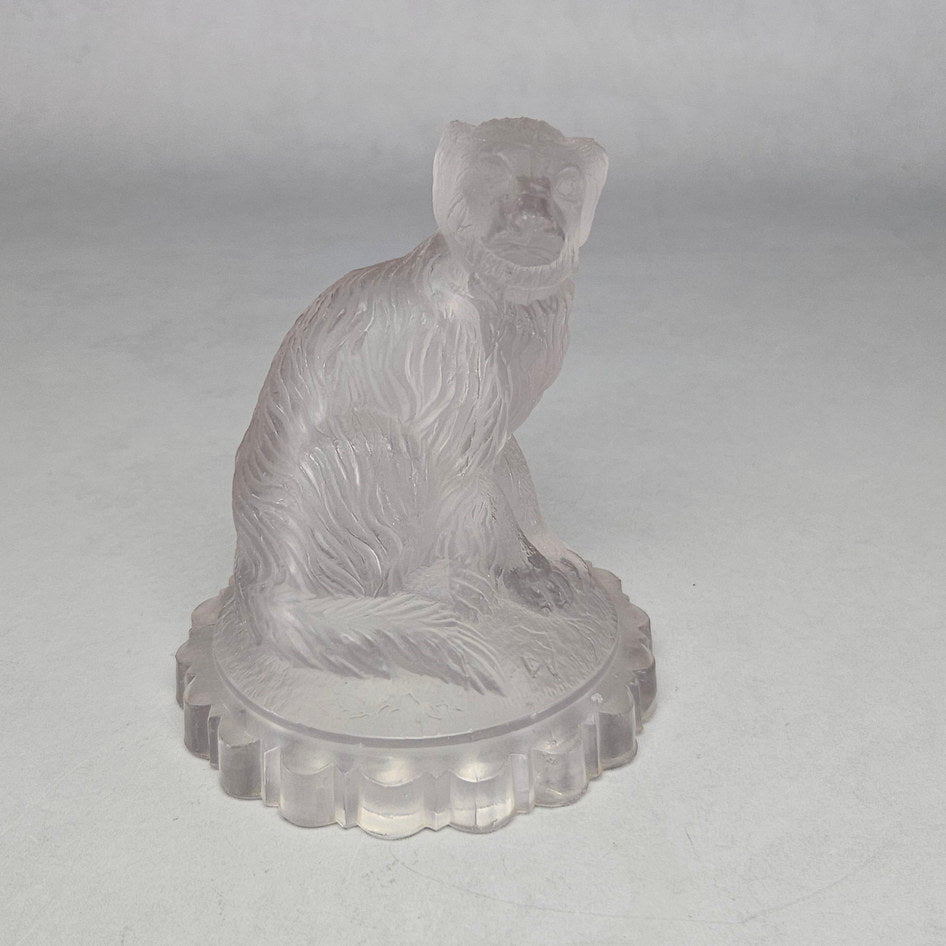
Animal-form glass has a special charm. It combines sculpture, utility and decorative appeal in a form that feels both collectable and personal. The Frosted Pressed Glass Seated Dog Figure Paperweight in the Collectibles by Deon collection is a beautiful example of this tradition, modelled as a long-haired seated dog on a scalloped circular base, with detailed moulded fur texture and a soft frosted finish that gives the figure a refined antique character. Based on documented catalogue comparisons, this piece is best described as an attributed Baccarat frosted pressed crystal seated dog paperweight, France, late 19th century. Browse the full glassware collection and the crystal and glass collection to see all pieces currently available.
A careful note on attribution
The safest and most accurate wording for this piece is attributed to Baccarat. The seated dog model closely corresponds with a Baccarat catalogue form recorded in the 1870 Baccarat pattern book as "Chien", meaning dog. A later 1885 Baccarat catalogue reference also records a related dog model. However, this example appears to be unmarked, meaning it should not be described as definitively signed Baccarat unless a factory mark, label or supporting provenance is present. This careful wording protects accuracy while giving collectors the important context: the model is strongly linked to Baccarat catalogue references, but unmarked pressed glass examples can sometimes have been copied by other glassworks.
Baccarat and French crystal history
Baccarat is one of the great names in French crystal. Founded in 1764 in eastern France, the company became known for high-quality glass and later crystal production. By the 19th century, Baccarat was producing a wide variety of luxury and decorative objects, including tableware, lighting, paperweights, scent bottles, ornamental glass and sculptural pieces. Pressed and moulded glass allowed makers to create detailed forms with repeated precision. Animal figures, including dogs, cats and other small sculptural objects, fitted perfectly into the Victorian and Napoleon III taste for decorative cabinet pieces and desk accessories.
What is pressed glass?
Pressed glass is made by pressing molten glass into a mould. This process allows detailed shapes and textures to be reproduced clearly. For a figure such as this seated dog, pressed glass is especially effective. The mould captures the long fur, facial features, paws, base detail and overall seated pose. The result is a small sculptural object with a high level of surface detail. The frosted finish softens the surface and helps reveal the moulded texture. Instead of shining like clear polished glass throughout, the figure has a gentle satin appearance that highlights the modelling.
Why dog paperweights were popular
Dogs were popular subjects in 19th-century decorative arts. They represented loyalty, companionship and domestic life, making them appealing in both practical and sentimental objects. A dog paperweight was not only useful on a writing desk. It was also decorative, personal and charming. It could sit among letters, books, writing tools and other desk accessories, bringing a small sculptural presence to everyday use. In the Victorian period and later 19th century, animal-form objects were widely collected. They appeared in ceramics, bronze, silver, glass, porcelain and wood. Pressed crystal dog figures fit naturally into this broader collecting tradition.
A closer look at this example
The dog paperweight shows the key features associated with the documented Baccarat model. The figure is seated on a circular scalloped base, which gives the piece stability and adds decorative rhythm around the edge. The dog itself is shown with long textured fur, a raised head and a calm seated posture. The frosted surface gives the figure a soft, almost misted appearance. This finish brings out the fur detail and makes the piece especially attractive when lit from the side or displayed against a darker background. The pale crystal body also gives the piece a quiet elegance. Its beauty lies in the form, texture and subtle surface finish rather than colour or heavy decoration.
Why this piece is collectable
This paperweight is collectable for several reasons. Firstly, it relates to a documented Baccarat catalogue model. Even when described carefully as attributed, that link gives it strong historical interest. Secondly, it represents the 19th-century tradition of French pressed and moulded crystal objects, a fascinating field that combines industrial skill, decorative design and collecting charm. Thirdly, the dog subject is appealing. Animal-form pieces often attract both glass collectors and collectors who enjoy decorative dogs, desk objects and small sculptural figures. Finally, the frosted finish and detailed moulding make the piece attractive for display. It is small enough for a cabinet, shelf or desk, but detailed enough to reward close viewing.
Is this piece rare?
It is best not to describe this piece as rare without more specific production information. However, it can fairly be described as a less commonly encountered 19th-century style pressed crystal animal paperweight, especially when compared with more ordinary clear glass desk objects. Its collector appeal comes from the combination of form, catalogue association, frosted finish, animal subject and decorative quality. For accurate listings, the strongest wording would be: attributed Baccarat, Baccarat catalogue model, frosted pressed crystal seated dog paperweight, France, late 19th century, unmarked example, less commonly encountered animal-form pressed crystal paperweight.
What to look for when collecting similar pieces
When collecting antique pressed crystal or pressed glass animal figures, condition is very important. Look carefully for chips around the base, ears, nose, paws and scalloped edge. These are the areas most likely to show damage. Check the frosted surface for heavy scratches, staining or polishing wear. Light age-related wear may be expected, but cracks, bruises or repairs should always be noted. Also examine the base. Some Baccarat pieces may be marked, but many older pressed glass pieces are unmarked. A mark can help confirm attribution, but absence of a mark does not remove the historical interest of a piece that closely matches a documented catalogue model.
How to display frosted crystal animal paperweights
This dog paperweight displays beautifully in a glass cabinet, on a writing desk, on a bookshelf or as part of a small animal-form glass collection. Because the glass is pale and frosted, it works especially well against darker backgrounds, wood surfaces or mirrored shelves. Side lighting helps reveal the moulded fur detail and gives the crystal more depth. It can be styled with French crystal, pressed glass, antique desk accessories, animal-form collectables, other paperweights, small bronze animals, Victorian decorative pieces and cabinet glass.
Why this piece is special
This attributed Baccarat frosted crystal seated dog paperweight is special because it combines charm, history and careful design. It is a small object, but it carries a rich collecting story. It connects to 19th-century French crystal production, Baccarat catalogue forms, pressed glass technology and the long tradition of animal-form decorative objects. Its frosted finish, scalloped base and detailed seated dog form make it a refined cabinet piece. For collectors of antique glass, French crystal, paperweights or animal figures, it offers a beautiful and historically interesting addition to a curated collection.
If you enjoy decorative glass and collector guides, you may also find our articles on Art Glass Collecting in South Africa: How to Identify Quality Glass and Avoid Cheap Imitations and Blue Willow Pattern: History, Meaning and Collector Appeal of interest.
View the Frosted Pressed Glass Seated Dog Figure Paperweight in the collection, or explore all pieces in the glassware collection and crystal and glass collection at Collectibles by Deon. For enquiries, visit the Contact page or learn more on the About page.