Art glass is a broad term used to describe decorative glass made with an emphasis on artistic intent rather than utility. It encompasses a wide range of techniques, origins, and periods, from the hand-blown Murano glass of Venice to the studio glass movement of the twentieth century. For collectors in South Africa, art glass represents one of the most visually rewarding categories of decorative objects, offering colour, form, and craftsmanship in pieces that are often genuinely one-of-a-kind.
This guide covers the main categories of collectable art glass, how to identify quality, and what to look for when distinguishing genuine studio or factory art glass from later imitations or decorative reproductions.
Murano Glass
Murano, the island near Venice, has been the centre of Italian glassmaking since the thirteenth century. Murano glass is characterised by its use of traditional techniques, including millefiori (a mosaic of glass canes fused together), sommerso (layers of coloured glass encased in clear glass), lattimo (opaque white glass), and gold leaf inclusions. Genuine Murano glass is hand-blown and shows the marks of individual craftsmanship: slight asymmetry, pontil marks on the base, and variations in wall thickness that are absent from machine-made glass.
Pieces in the collection that represent the Murano tradition include the Mid-Century Murano Sommerso Art Glass Fish Sculpture, the Cesare Toso Murano Neodymium Glass Praying Girl Figurine, the Hand-Blown Blue Bullicante Art Glass Swan Sculpture, the Murano Opaline Art Glass Seashell Bowl, the Murano-Style Blue Green Millefiori Art Glass Goblet, the Pair of Italian Murano Latticino and Gold Glass Fish, the Italian Murano Gold Leaf Dolphin and Flower Double Candlestick, and the Mid-Century Striped Murano Art Glass Fish Sculpture.
Mdina Glass
Mdina Glass was established in Malta in 1968 by Michael Harris, a British glass artist who had trained at the Royal College of Art. The studio produced hand-blown glass characterised by earthy, Mediterranean colours: sand, sea-green, amber, and brown, often swirled or layered in organic forms. Mdina pieces are typically signed on the base and are collected internationally. The Mdina Small Hand-Blown Art Glass Seahorse Sculpture is a characteristic example of the studio's figurative work.
Bohemian and Central European Art Glass
The glassmaking regions of Bohemia (present-day Czech Republic) and Austria produced some of the most technically accomplished art glass of the late nineteenth and early twentieth centuries. The Art Nouveau period in particular saw Bohemian glassmakers develop iridescent, enamelled, and cameo glass of exceptional quality. The Attributed Kralik Art Nouveau Iridescent Twin-Stem Glass Vase is a documented example of this tradition. The Franz Welz Honeycomb Splatter Art Glass Pitcher represents another strand of Bohemian production, using splatter and spatter techniques to create vivid surface decoration. The Pair of Harrach Victorian Enamelled Moroccan Ware Glass Vases illustrates the export-oriented enamelled glass for which Harrach was known.
Empoli Glass
Empoli, a town in Tuscany, was a centre of Italian glass production from the nineteenth century onward, known particularly for its large-format decorative pieces in opaque and cased glass. Empoli glass is typically characterised by its substantial weight, smooth surfaces, and use of strong colours, particularly green, black, and white. The collection includes the Vintage Empoli Italian Glass Black and White Cased Glass Pitcher, the Vintage Empoli Italian Opaque White Glass Vase with Black Handles, and the White Opaline Empoli Glass Lidded Jar with Rounded Finial.
Maltese and Island Glass Studios
Beyond Mdina, the island glass studio tradition produced a number of collectable makers. The Mtarfa Glassblowers Handmade Art Glass Fish-Shaped Paperweight represents the work of another Maltese studio operating in the tradition established by Michael Harris.
Studio and Hand-Blown Art Glass
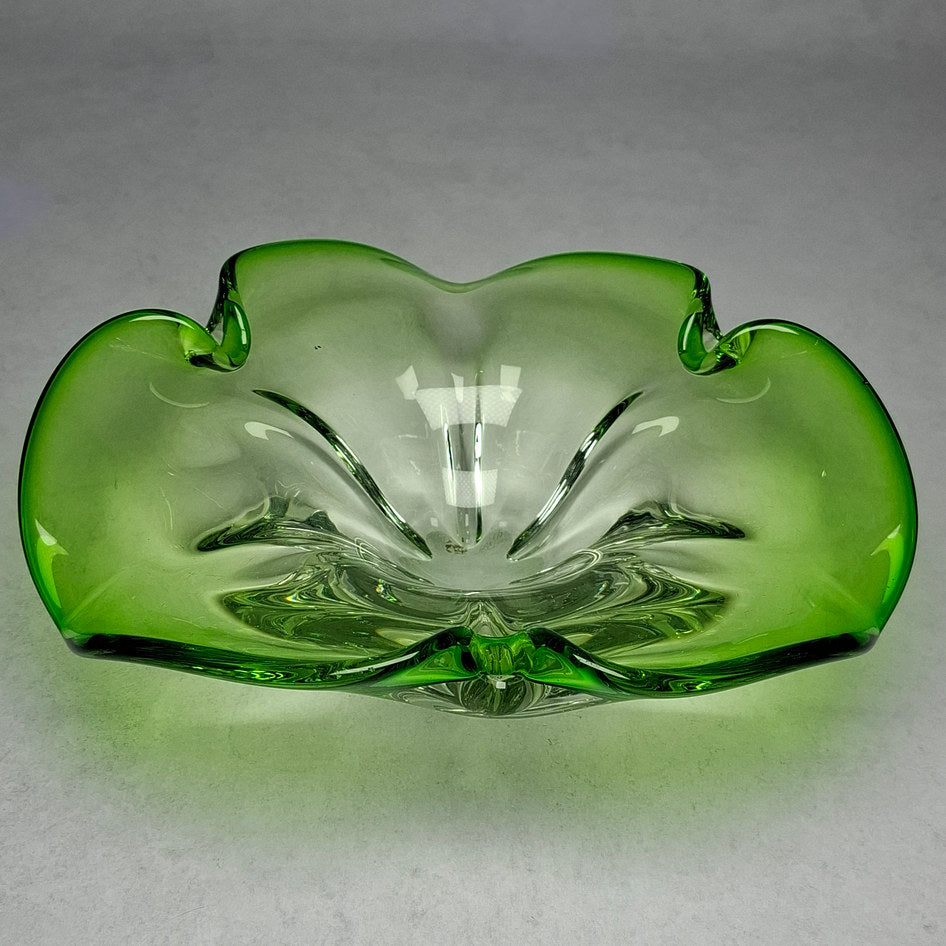
Beyond the named studios and regions, the collection includes a range of hand-blown art glass pieces that demonstrate the breadth of the category. The Liz Lacey Studio Art Glass Vase is a South African studio glass piece of particular local interest. Other hand-blown examples include the Hand-Blown Iridescent Confetti Glass Rose Bowl, the Multicoloured Spatter Hand-Blown Art Glass Ruffled Vase, the Vintage Art Glass Bowl with White Filigree and Amber Applied Elements, the Vintage Green Murano Glass Flower Shaped Bowl, the Large Vintage Mid-Century Red Swirl Italian Art Glass Centrepiece Bowl, and the Vintage MCM Pale Blue Opaline Art Glass Vase in Danish Style.
Decorative Glass: Decanters, Vases and Sculptural Pieces
The broader decorative glass category encompasses pieces that sit between utility and art, including decanters, vases, and sculptural objects. The collection includes the Mid-Century Amber Cat Glass Decanter, the MCM Red Thumbprint Textured Glass Decanter Bottle, the Mid-Century Clear and Yellow Art Glass Duck Sculpture, the Decorative Blue and Clear Glass Swan Sculpture, the Ravenhead White Mouth-Blown Glass Vase with Black Trailing Lines, the Red and White Murano-Style Cased Art Glass Heart Bowl, the Heavy Iridescent Crackle Glass Heart-Shaped Vase, the Ivima Scroll Green Jadeite Glass Goblet, the Tall Deep Amethyst Glass Pitcher, the Vintage Amethyst Glass Onion-Shaped Genie Bottle, the Vintage Amethyst and Cased White Glass Tree Stump Vases, the Vintage Purple and White Cased Glass Bud Vase, the Vintage Cobalt Blue Bud Vase with Gold Accents, and the Cristal d'Arques Purple Glass Bear.
How to Identify Quality Art Glass
The key distinction in art glass collecting is between hand-made and machine-made glass. Hand-blown glass shows evidence of the glassblower's breath and tools: slight irregularities in wall thickness, a pontil mark or polished pontil scar on the base, and organic variation in form. Machine-pressed glass is uniform, with sharp mould seams and consistent wall thickness throughout.
When assessing a piece, examine the base first. A pontil mark, whether rough, ground flat, or polished, indicates hand-blown production. Look at the walls in transmitted light: hand-blown glass shows variation; pressed glass does not. Check for mould seams, which run vertically on pressed pieces and are absent on blown work. Weight is also informative: quality art glass tends to be heavier than it appears, particularly Murano and Empoli pieces.
Avoiding Cheap Imitations
The art glass market includes a significant volume of decorative glass produced in Asia from the 1980s onward that mimics the appearance of Murano, Mdina, and other studio glass. These pieces are typically lighter in weight, have thinner walls, lack pontil marks, and show less variation in colour distribution than genuine studio glass. Labels reading "Murano style" or "hand-crafted" without a specific maker attribution are a reliable indicator of decorative reproduction rather than collectable studio glass.
Genuine Murano glass from established makers is typically signed, labelled with a Murano glass consortium sticker, or accompanied by documentation. Mdina glass is signed on the base. Bohemian makers such as Kralik and Harrach are identified by form, technique, and, where present, paper labels or etched marks.
Art Glass in South Africa
Art glass reached South Africa through several channels: British and European imports during the colonial period, household goods brought by immigrants, and more recently through auction houses and specialist dealers. Murano glass in particular has a strong presence in South African collections, reflecting both its widespread export history and its enduring appeal as a decorative object.
If you enjoy decorative glass and collector guides, you may also find our articles on Blue Willow Pattern: History, Meaning and Collector Appeal and Lucia Ware: A Collector's Guide to South African Mid-Century Pottery of interest.
Explore the curated art glass collection at Collectibles by Deon and discover distinctive glass pieces selected for collectors, decorators and lovers of colour, form and meaningful design. For enquiries about specific pieces or availability, visit the Contact page, or learn more about the store.