
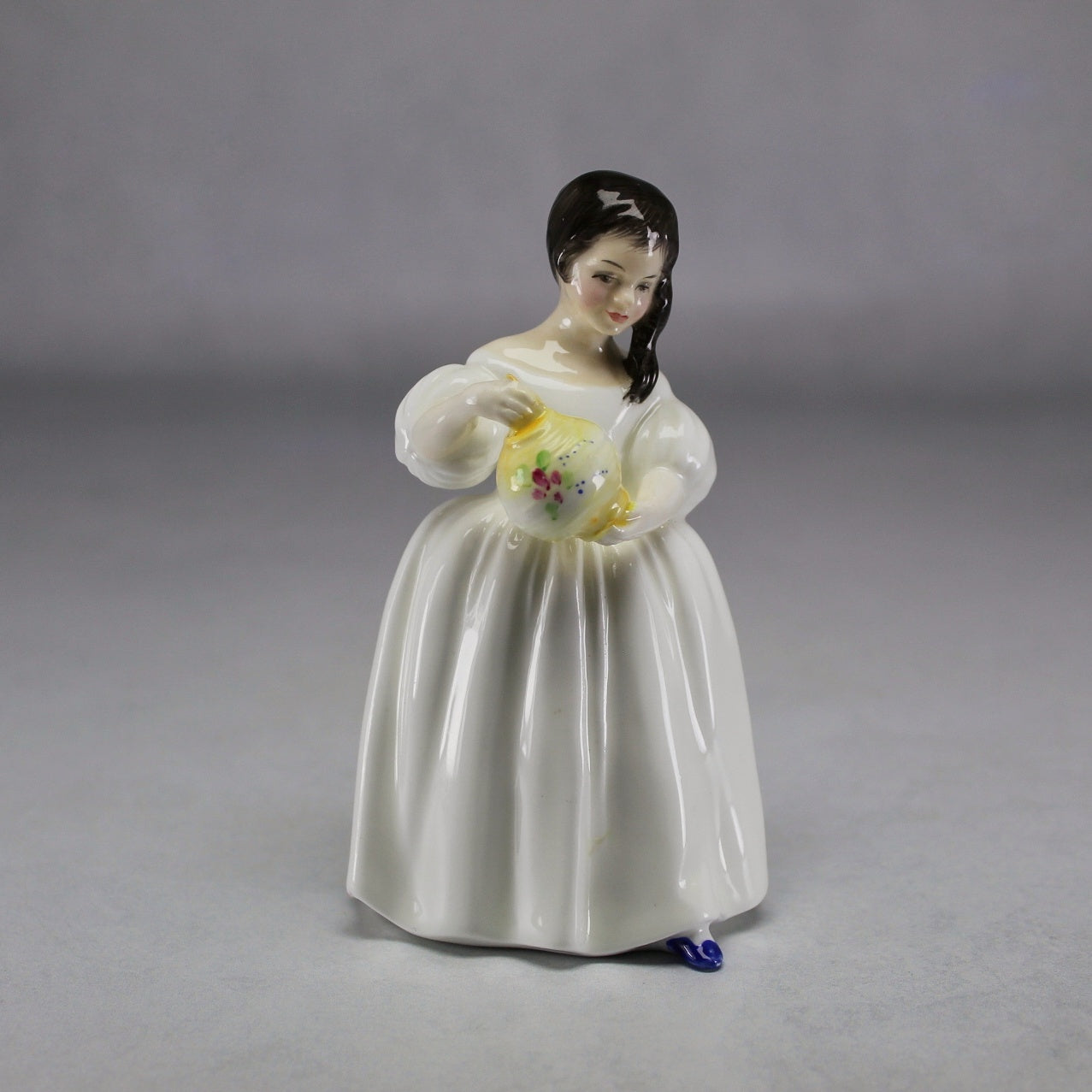
Royal Doulton figurines are among the most actively collected categories of British ceramics, and where there is active collecting there is also the possibility of misattribution, reproduction, and outright faking. The good news is that Royal Doulton figurines are among the most thoroughly documented ceramics in the world, with a comprehensive published reference system that makes authentication more straightforward than in many other collecting categories.
This guide covers the practical steps for authenticating a Royal Doulton figurine, from reading the backstamp to assessing the bone china body, with specific reference to the pieces in the Collectibles by Deon Royal Doulton collection.
Step 1: Read the Backstamp
The base of every genuine Royal Doulton figurine carries a printed backstamp that provides the most important authentication information. A genuine Royal Doulton backstamp includes:
- The Royal Doulton name and lion device: the lion standing on a crown is the Royal Doulton trademark, used from 1902 onward when King Edward VII granted the royal warrant. Any piece marked "Royal Doulton" was made after 1902. Earlier pieces from the Doulton factory are marked "Doulton" without the "Royal" prefix.
- "Made in England": genuine Royal Doulton figurines produced for the export market carry a country of origin mark. "Made in England" indicates production after approximately 1921.
- "Bone China": the explicit statement of "bone china" in the backstamp became standard on Royal Doulton figurines in the twentieth century and confirms the body type.
- The HN number: every Royal Doulton figurine model is assigned a unique HN number (the prefix stands for Harry Nixon, the head of the painting department when the numbering system was introduced in 1913). The HN number is the single most important identification tool for Royal Doulton figurines.
- The model name: the name of the figurine model is usually printed alongside the HN number on the base.
A piece that lacks an HN number, carries an HN number that does not correspond to the model name, or shows a backstamp that does not match the documented Royal Doulton mark for the claimed period should be treated with caution.
Step 2: Cross-Reference the HN Number
The HN number system is comprehensively documented in the Charlton Standard Catalogue of Royal Doulton Figurines, which is the standard reference used by dealers, auction houses, and collectors internationally. The catalogue lists every HN number with the model name, introduction date, retirement date, colourway variations, and known price ranges.
Cross-referencing the HN number against the Charlton catalogue allows you to verify:
- That the HN number corresponds to the model name on the base
- The introduction date of the model (which establishes the earliest possible production date)
- The retirement date (which establishes the latest possible production date for retired models)
- Whether the colourway of the piece matches a documented variant for that HN number
The Royal Doulton collection at Collectibles by Deon includes pieces with verified HN numbers, including the Royal Doulton Lavinia HN1955 (introduced 1940), the Royal Doulton Valerie HN2107 (introduced 1953), the Royal Doulton Paisley Shawl HN1988 (introduced 1946), the Royal Doulton Andrea HN3058 (introduced 1985), the Royal Doulton Mandy HN2476 (introduced 1982), and the Royal Doulton Priscilla M24. The M prefix indicates a miniature series figurine, a separate numbering sequence from the main HN series.
Step 3: Assess the Bone China Body
Genuine Royal Doulton figurines are made from bone china, a body type with specific physical characteristics that can be assessed without specialist equipment. Read our guide to bone china and porcelain for a full explanation of the body type.
Key characteristics of genuine Royal Doulton bone china:
- Translucency: hold the piece up to a strong light source. Genuine bone china shows a warm, creamy translucency in thin sections such as the skirt of a lady figurine. A piece that is completely opaque in thin sections may not be bone china.
- Weight: bone china is notably light relative to its size. A figurine that feels unexpectedly heavy for its size may be made from a different, denser body.
- Tone when tapped: tap the piece gently with a fingernail. Genuine bone china produces a clear, ringing tone. A dull, flat sound suggests a different body type.
- Foot rim: examine the unglazed foot rim. Genuine Royal Doulton bone china shows a fine, white, dense clay body. A buff, grey, or coarse clay body is inconsistent with bone china.
Step 4: Assess the Painting Quality
Royal Doulton figurines were hand-painted, and the quality of the painting is an important authentication indicator. Genuine pieces show:
- Consistent, controlled brushwork: the painting on genuine Royal Doulton figurines is precise and controlled, with clean edges and consistent colour application. Smudged, uneven, or poorly registered painting is a warning sign.
- Correct colour palette: each HN number has a documented colourway. The colours on the piece should match the documented colourway for that model. Unusual or incorrect colours may indicate a reproduction or a misidentified piece.
- Gilding quality: where gilding is present, it should be even and consistent. Thin, patchy, or incorrectly placed gilding is a warning sign.
Step 5: Check for Known Reproductions
Royal Doulton figurines have been reproduced by various manufacturers, and some reproductions are of sufficient quality to deceive inexperienced collectors. The most common issues are:
- Unlicensed copies: some manufacturers have produced figurines that closely resemble Royal Doulton models without carrying the Royal Doulton mark. These are not genuine Royal Doulton pieces and should not be sold as such.
- Misattributed pieces: figurines from other British manufacturers (including Coalport, Royal Worcester, and others) are sometimes misidentified as Royal Doulton by sellers who are not familiar with the differences. Always verify the backstamp.
- Added or altered marks: in rare cases, marks have been added to or altered on pieces to suggest a more desirable maker or model. A mark that appears inconsistent with the style of the piece, or that shows signs of having been applied over an existing mark, should be treated with great caution.
The Brambly Hedge and Character Series
Beyond the main HN lady figurine series, Royal Doulton produced several character and licensed series that are equally collectable. The Royal Doulton Brambly Hedge Lady Woodmouse Figurine DBH5 in the collection is an example of the Brambly Hedge series, produced under licence from the illustrator Jill Barklem. These pieces carry DBH prefix numbers rather than HN numbers, and the same authentication principles apply: verify the prefix number against published references and check the backstamp for the Royal Doulton mark and country of origin.
Where to Find Published References
The primary reference for Royal Doulton figurine authentication is the Charlton Standard Catalogue of Royal Doulton Figurines, published by the Charlton Press. It is available from specialist book dealers and some auction houses. The Royal Doulton International Collectors Club (now the Royal Doulton Collectors Club) has also published extensive documentation on the figurine range.
For South African collectors, the major auction houses including Strauss and Co and Stephan Welz regularly include Royal Doulton figurines in their sales, and their catalogues provide useful comparables for condition and pricing.
Frequently Asked Questions
What does the HN number on a Royal Doulton figurine mean?
The HN prefix stands for Harry Nixon, the head of the painting department when the numbering system was introduced in 1913. Every Royal Doulton figurine model is assigned a unique HN number, which can be cross-referenced against the Charlton Standard Catalogue to verify the model name, introduction date, retirement date, and documented colourways.
How do I know if a Royal Doulton figurine is genuine?
Check the base for the Royal Doulton backstamp with the lion device, the HN number, and the model name. Cross-reference the HN number against the Charlton Standard Catalogue to verify that the number corresponds to the model name and that the colourway is documented. Assess the bone china body for translucency, weight, and the clear ringing tone when tapped. Examine the painting quality for consistency and correct colour palette.
When did Royal Doulton start using the "Royal" prefix?
Royal Doulton began using the "Royal" prefix in 1902, when King Edward VII granted the royal warrant. Any piece marked "Royal Doulton" was made after 1902. Earlier pieces from the Doulton factory are marked "Doulton" without the "Royal" prefix.
What is the M series in Royal Doulton figurines?
The M prefix indicates a miniature series figurine, a separate numbering sequence from the main HN series. Miniature figurines are smaller versions of standard models and are collected both as part of a main collection and as a specialist category in their own right.
Are Royal Doulton figurines still being made?
Royal Doulton figurine production has changed significantly in recent decades. The Doulton brand was acquired by Waterford Wedgwood in 2005 and subsequently by KPS Capital Partners, trading as WWRD. Production of some figurine lines has continued under the Royal Doulton name, though the range is considerably smaller than at the peak of production in the mid-twentieth century.
A rewarding category for collectors of Royal Doulton figurines, British bone china figurines, or documented British ceramics. Browse the Royal Doulton collection to explore available pieces, or contact us to ask about specific HN numbers or models. You can also learn more about the store.