
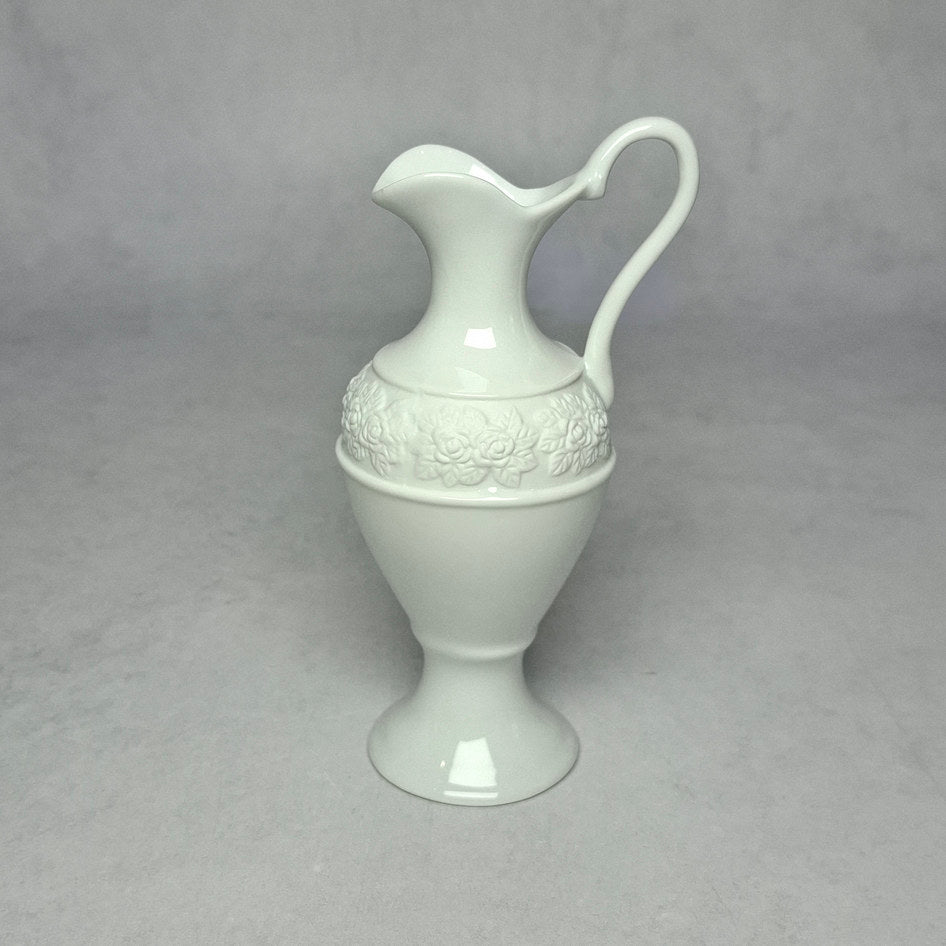
If you have ever wondered why one plate feels lighter and more translucent than another, or why some ceramics chip cleanly while others crumble, the answer lies in the clay body. The terms bone china, porcelain, stoneware, and earthenware describe fundamentally different materials, made from different ingredients, fired at different temperatures, and with different properties. Understanding the difference matters for collectors because it affects value, durability, identification, and the kind of care a piece requires.
This guide explains each ceramic body type clearly and factually, with specific reference to the British and European makers most commonly encountered in the South African antiques market.
The Four Main Ceramic Body Types
Bone China
Bone china is a ceramic body developed in Britain in the late eighteenth century, most commonly attributed to Josiah Spode II, who refined the formula around 1800. It is made from a mixture of calcined animal bone (typically cattle bone), china clay (kaolin), and china stone (petuntse). The standard British formula contains approximately 50 percent bone ash, 25 percent china clay, and 25 percent china stone, though exact formulations vary by manufacturer.
The bone ash content gives bone china its defining characteristics: it is exceptionally white, translucent when held to light, and strong relative to its thinness. It fires at temperatures between approximately 1200 and 1300 degrees Celsius. Bone china is a specifically British invention and remains the dominant fine ceramic body used by British manufacturers. When you hold a piece of genuine bone china up to a light source, you should be able to see your fingers through it.
The major British makers whose pieces appear regularly in the South African market, including Royal Doulton, Wedgwood, Royal Albert, Aynsley, and Belleek, all produced bone china as their primary fine ware body. The word "bone china" in a backstamp is a reliable indicator of the body type, though as noted in our guide to dating antique ceramics, the explicit use of this term in marks became common only in the twentieth century.
Hard-Paste Porcelain
Hard-paste porcelain is the original Chinese porcelain body, developed in China during the Tang Dynasty and perfected through the Song, Ming, and Qing dynasties. It is made from china clay (kaolin) and china stone (petuntse), without bone ash, and is fired at very high temperatures, typically between 1280 and 1400 degrees Celsius. The result is a dense, glassy, extremely hard body that is translucent in thin sections and produces a clear, ringing tone when tapped.
Hard-paste porcelain was the dominant fine ceramic body in China, Japan, and continental Europe. The major European hard-paste manufacturers include Meissen (the first European factory to produce hard-paste porcelain, from 1710), Sevres, and the major German and Austrian factories. The Chinese export porcelain in the Collectibles by Deon collection is hard-paste porcelain. Read our guide to Oriental ceramics for more on Chinese and Japanese porcelain.
Hard-paste porcelain is denser and heavier than bone china of equivalent thickness, and its translucency has a cooler, greener or greyish tone compared to the warm white translucency of bone china. When chipped, hard-paste porcelain shows a sharp, glassy fracture. Bone china shows a slightly softer, more granular fracture.
Soft-Paste Porcelain
Soft-paste porcelain was developed by European manufacturers in the seventeenth and eighteenth centuries as an attempt to replicate Chinese hard-paste porcelain before the formula was understood. It is made from various combinations of white clay, glass frit, soapstone, or other materials, and is fired at lower temperatures than hard-paste porcelain, typically between 1100 and 1200 degrees Celsius. The result is a softer, more porous body that is less durable than hard-paste porcelain but often has a warmer, creamier appearance.
Soft-paste porcelain was produced by early British factories including Chelsea, Bow, Derby, and Worcester before the development of bone china. It is less commonly encountered in the South African market than bone china or hard-paste porcelain, but appears in collections of early English ceramics. Soft-paste porcelain can be identified by its warmer colour, softer glaze, and the way the glaze pools in the recesses of moulded decoration.
Stoneware
Stoneware is a dense, non-porous ceramic body fired at high temperatures, typically between 1200 and 1300 degrees Celsius, which vitrifies the clay and makes it impermeable to liquids without glazing. It is made from stoneware clay, which contains more iron and other minerals than the refined clays used for porcelain. Stoneware is opaque, heavier than porcelain of equivalent size, and extremely durable.
Stoneware has a long tradition in both European and Asian ceramics. In the British context, it is associated with salt-glazed wares, Doulton Lambeth studio pottery, and functional wares. Wedgwood Jasperware is technically a fine stoneware body, not porcelain, despite its refined appearance. Jasperware is made from barium sulphate and other materials and is fired to produce a dense, matte, unglazed surface. Read our guide to Wedgwood Jasperware for more detail.
Earthenware
Earthenware is the oldest and most widely produced ceramic body type. It is made from common clay and fired at relatively low temperatures, typically between 900 and 1150 degrees Celsius. The result is a porous, opaque body that requires glazing to hold liquids. Earthenware is heavier and less refined than porcelain or bone china, and chips show a buff, red, or grey clay body rather than the white body of porcelain.
Most transferware, including Blue Willow and other Staffordshire printed pottery, is made on an earthenware body. The cream-coloured earthenware body developed by Josiah Wedgwood in the 1760s, known as creamware or Queen's Ware, was a significant development that made refined earthenware tableware accessible to a wide market. Read our guide to transferware for more on the printed pottery tradition.
South African commercial pottery, including Lucia Ware, Drostdy, and Crescent Potteries, is generally produced on earthenware or semi-vitreous earthenware bodies. Read our guide to South African pottery makers for more detail.
How to Identify the Body Type of a Piece
Several practical tests help identify the ceramic body type of an unmarked or unfamiliar piece:
- Translucency test: hold the piece up to a strong light source. Bone china and thin hard-paste porcelain will show translucency. Earthenware and stoneware will not. Bone china has a warm, creamy translucency; hard-paste porcelain has a cooler, slightly greenish translucency.
- Tap test: tap the piece gently with a fingernail. Hard-paste porcelain and bone china produce a clear, ringing tone. Earthenware produces a duller, flatter sound. Stoneware produces a solid, dense sound.
- Chip examination: if a piece has a chip (which you should never deliberately cause), examine the exposed clay body. White, fine-grained clay indicates porcelain or bone china. Buff, grey, or red clay indicates earthenware. A dense, glassy fracture indicates hard-paste porcelain or stoneware.
- Weight: bone china is notably light relative to its size. Hard-paste porcelain is denser. Earthenware is heavier still for equivalent volume.
- Foot rim: examine the unglazed foot rim. The colour and texture of the exposed clay body provides useful information about the body type.
Why Body Type Matters for Collectors
- Value: bone china and hard-paste porcelain from documented makers are generally more valuable than earthenware from the same period, reflecting the higher cost of materials and production.
- Care: bone china and porcelain are more resistant to thermal shock than earthenware, but all antique ceramics should be handled carefully and washed by hand rather than in a dishwasher.
- Identification: knowing the body type helps narrow down the maker and period of an unmarked piece. A piece with a white, translucent bone china body is almost certainly British or made by a British-influenced manufacturer.
- Authenticity: the body type of a piece should be consistent with its claimed maker and period. A piece claimed to be eighteenth-century Chinese porcelain that shows the characteristics of bone china is inconsistent, because bone china is a British invention.
Frequently Asked Questions
What is bone china made of?
Bone china is made from a mixture of calcined animal bone (typically cattle bone), china clay (kaolin), and china stone (petuntse). The standard British formula contains approximately 50 percent bone ash, which gives bone china its characteristic whiteness, translucency, and strength.
Is bone china better than porcelain?
Bone china and hard-paste porcelain are different materials with different properties, not a hierarchy of quality. Bone china is whiter, more translucent, and lighter than hard-paste porcelain of equivalent thickness. Hard-paste porcelain is denser, harder, and more resistant to chipping. Both are fine ceramic bodies used by major manufacturers for high-quality tableware and decorative pieces.
How can I tell if a piece is bone china or porcelain?
Hold the piece up to a strong light source. Bone china has a warm, creamy translucency. Hard-paste porcelain has a cooler, slightly greenish translucency. Bone china is also lighter and produces a clearer ringing tone when tapped. The backstamp often states "bone china" explicitly, though this practice became common only in the twentieth century.
Is earthenware less valuable than bone china?
Not necessarily. Value depends on the maker, rarity, condition, and collector demand, not the body type alone. Transferware on an earthenware body from a documented Staffordshire maker can be highly collectable. South African commercial pottery on an earthenware body is an emerging collecting category. Body type is one factor among several in assessing value.
Is Wedgwood Jasperware porcelain?
No. Wedgwood Jasperware is technically a fine stoneware body, not porcelain. It is made from barium sulphate and other materials and is fired to produce a dense, matte, unglazed surface. Despite its refined appearance, it is classified as stoneware rather than porcelain.
What is the difference between creamware and bone china?
Creamware (also known as Queen's Ware) is a refined earthenware body developed by Josiah Wedgwood in the 1760s, characterised by its cream colour and lead glaze. Bone china is a different body type developed around 1800, containing bone ash, and is whiter, more translucent, and stronger than creamware. Both are British inventions, but they are distinct materials.
A useful reference for collectors of British ceramics, Royal Doulton, Wedgwood, transferware, or South African pottery. Browse the Collectibles Journal for more collector guides, or contact us if you have a question about a specific piece. You can also learn more about the store.