
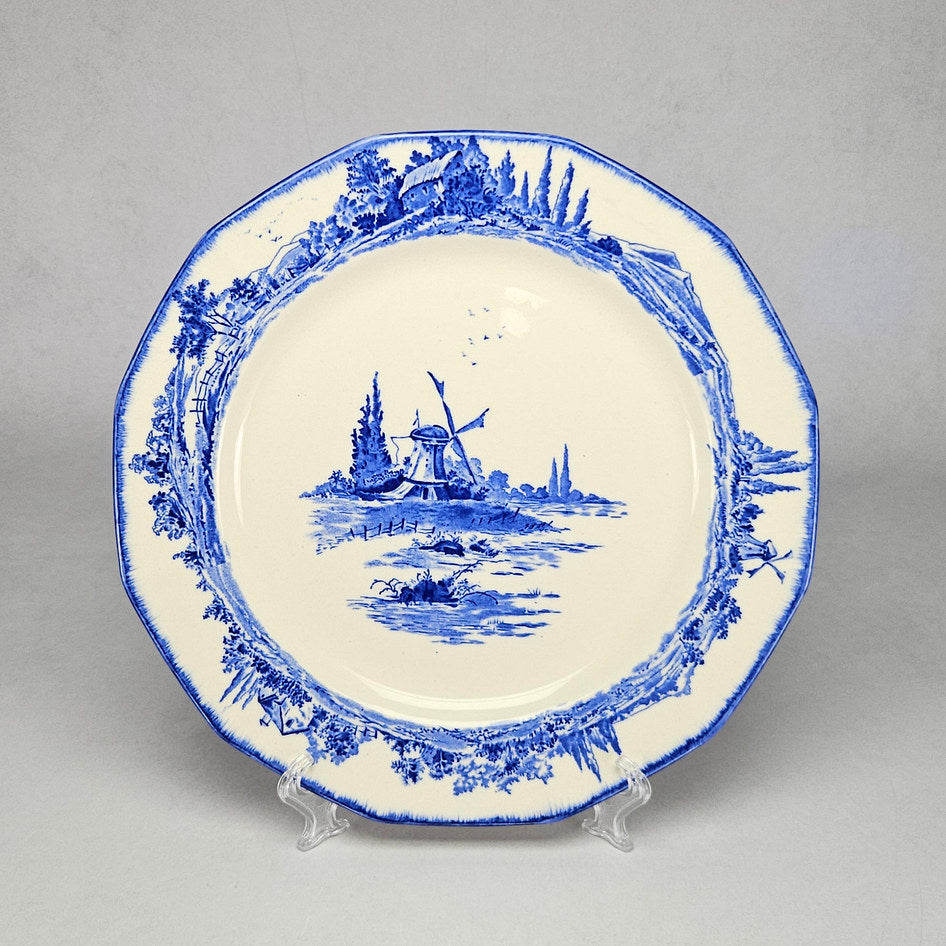
Early Royal Doulton transferware has a quiet elegance that continues to appeal to collectors of English ceramics. The Royal Doulton Norfolk Blue D4209 Scalloped Plate is a beautiful example, combining a classic blue and white palette with a rural landscape design and a refined early 20th century shape. With its central windmill scene, scalloped rim, countryside border and clearly printed Royal Doulton Norfolk backstamp, this plate tells a story of English decorative tableware from the 1920s and 1930s. Browse the full Royal Doulton collection at Collectibles by Deon to see all pieces currently available.
A short history of Royal Doulton
Royal Doulton began in Lambeth, London, in 1815 when John Doulton became involved in a small pottery business. The company first became known for practical stoneware, but over time it developed into one of the most recognised names in British ceramics. By the late 19th and early 20th centuries, Royal Doulton was producing a wide range of decorative and tableware ceramics, including art pottery, character jugs, figurines, dinnerware and transferware patterns. The Norfolk Blue pattern belongs to this rich Royal Doulton tableware tradition, reflecting a period when printed scenic designs remained popular in English homes and when blue and white ceramics continued to hold strong decorative appeal.
The Norfolk Blue pattern
The Norfolk pattern is a blue transferware design featuring rural English scenery. This plate carries the pattern number D4209 and the Royal Doulton Norfolk backstamp, along with registration numbers 251612 and 597783. The D4209 pattern number places the design in Royal Doulton's earthenware series and supports an early 1920s introduction. Surviving Norfolk examples are documented with impressed date marks from the 1920s and 1930s, making the pattern firmly part of early 20th century Royal Doulton production. The pattern name Norfolk suggests a connection to the English county known for flat landscapes, waterways, villages and windmills, and the design captures this atmosphere beautifully through its windmill centre and rural border scenes.
The layout of the plate
The design of this plate is carefully balanced. At the centre is a blue transferware windmill landscape. The windmill stands beside water, with trees, fencing and birds adding atmosphere to the scene. The design is simple enough to leave open space in the centre, but detailed enough to create a strong focal point. Around the rim is a wider landscape border including trees, buildings, fences, water, countryside details and distant scenery, forming a circular rural panorama around the edge of the plate. The scalloped rim gives the plate extra shape and movement, softening the outline and making the piece more decorative when displayed upright on a stand. The blue edge detail frames the whole design and reinforces the classic blue and white look.
Why blue transferware remains collectable
Blue transferware has been collected for generations because it combines practicality, design and history. Transfer printing allowed detailed patterns to be reproduced on ceramics with greater consistency than hand-painting alone. Blue became one of the most enduring colours for transferware because it was strong, attractive and suited both table use and display. It also linked visually to earlier blue and white porcelain traditions, which had long been admired in Europe. Royal Doulton Norfolk Blue sits within this wider history. It is not only a plate, but part of the continuing English love of blue and white decorative ceramics. For more blue and white pieces, browse the Blue Willow collection and the Blues and Whites collection.
Why this plate is significant
This plate is significant because it is clearly marked, dateable by pattern information and strongly decorative. The D4209 pattern number helps place the design within Royal Doulton's early 20th century earthenware production. The Norfolk name and registration numbers add further identification value. The blue transferware landscape and scalloped form make the piece especially attractive for display. It is a refined example of Royal Doulton tableware from the period, suitable for collectors of blue and white ceramics, Royal Doulton patterns and English transferware.
Is Royal Doulton Norfolk rare?
Royal Doulton Norfolk should not generally be described as rare. The pattern was produced across a range of tableware forms, and examples can still be found on the secondary market. However, some pieces may be less commonly encountered than others. Larger serving pieces, unusual shapes, pieces with clear date marks, excellent condition examples and well-preserved scalloped or shaped plates may have stronger collector appeal. This plate is best described as collectable, dateable and display-worthy rather than rare.
What to look for when collecting Royal Doulton Norfolk
When collecting Royal Doulton Norfolk, start with the backstamp. Look for the Royal Doulton mark, the Norfolk pattern name, the D pattern number if present and any registration numbers or impressed date marks. These details help confirm the pattern and may help refine the date. Condition is also important. Check for chips, cracks, crazing, staining, rim wear, surface scratching and old restoration. Blue transferware pieces can also show minor transfer smudging or firing marks, which should be assessed honestly. For plates, the rim and foot are especially important. Shaped rims can be vulnerable to small chips, and the foot rim often shows signs of age or use.
How to display this Norfolk Blue plate
This plate displays beautifully on a stand, in a cabinet or as part of a blue and white wall arrangement. It pairs well with other blue transferware, Delft-style ceramics, Willow pattern pieces, English tableware and Royal Doulton collectables. The windmill scene also makes it suitable for a countryside-inspired or cottage-style display. Because the design has a calm blue and white palette, it can sit comfortably in both traditional and modern interiors. A single plate can act as a quiet focal point, while several blue and white pieces together create a stronger collector's display.
Why this piece is special
This Royal Doulton Norfolk Blue D4209 plate is special because it brings together maker history, early 20th century design and classic English scenic transferware. The windmill centre gives the plate charm. The rural border adds detail. The scalloped rim gives it display presence. The backstamp and pattern number provide useful collector information. For collectors of Royal Doulton, blue and white ceramics or English transferware, this is a refined and highly displayable piece with strong historical appeal.
If you enjoy English transferware and collector guides, you may also find our articles on Blue Willow Pattern: History, Meaning and Collector Appeal and Collecting T.G. Green Cornishware Blue and White Kitchen Ware of interest.
View the Royal Doulton Norfolk Blue D4209 Scalloped Plate in the collection, or explore all Royal Doulton pieces at Collectibles by Deon. For enquiries, visit the Contact page or learn more on the About page.