Art Deco is one of the most recognisable design styles of the twentieth century. Bold, stylish, and confident, it brought together luxury, modernity, and strong geometric design in a way that still feels fresh today.
For collectors, Art Deco is an exciting period because it appears across many types of objects. Ceramics, glassware, clocks, mirrors, lamps, figurines, furniture, jewellery, and everyday household pieces can all show Art Deco influence. At Collectibles by Deon, Art Deco pieces are especially appealing because they combine decorative beauty with strong period character.
What Was the Art Deco Period?
Art Deco developed in the early twentieth century and became especially popular during the 1920s and 1930s. The style is closely linked to the 1925 Paris Exposition Internationale des Arts Decoratifs et Industriels Modernes, a major exhibition of modern decorative arts. Art Deco was about looking forward. It reflected a world fascinated by speed, cities, travel, cinema, technology, and modern living. Unlike the flowing natural lines of Art Nouveau, Art Deco often used sharper shapes, stronger outlines, and a more structured sense of design.
What Inspired Art Deco?
Art Deco was not inspired by only one source. It was a mixture of many ideas, styles, and cultural influences, including geometric design and Cubism, machine-age design and industrial progress, ancient Egyptian motifs, African and East Asian design sources, the Ballets Russes and theatrical costume design, and luxury materials and fine craftsmanship.
The discovery of Tutankhamun's tomb in 1922 helped increase interest in Egyptian-inspired decoration. This is why Art Deco pieces sometimes include stepped forms, sunbursts, fans, pyramids, scarab-like shapes, and strong symmetrical patterns. The machine age also had a strong influence, with designers looking at trains, ocean liners, skyscrapers, and motor cars, which helped create the streamlined look that became part of later Art Deco design.
What Does Art Deco Look Like?
Art Deco is often easy to recognise once you know what to look for. Common features include bold geometric shapes, strong symmetry, stepped forms, zigzags, sunburst patterns, fan shapes, chevron patterns, stylised flowers, animals and figures, streamlined curves, strong colour contrast, and a sense of glamour or movement. Typical colour palettes include black, chrome, gold, silver, cream, and jewel tones with clean outlines throughout.
Not every Art Deco item will show all of these features. A piece may be Art Deco because of its shape, its pattern, its colours, its materials, or the way all these elements work together. Browse the Art Deco collection to see how these features appear across different object types.
Art Deco and Ceramics
Art Deco ceramics are highly collectable because the style works so well in pottery and porcelain. Ceramic pieces from the period often show bold shapes, angular handles, stepped bases, geometric borders, stylised flowers, or strong colour contrasts. British ceramic makers such as Clarice Cliff, Shelley, Carlton Ware, and others produced pieces that can show Art Deco influence. Not every piece by these makers is Art Deco, so the shape, pattern, and date should always be considered together.
In the collection, the Elsterwerda Art Deco Mottled Ombre Green Serving Plate M65 and the Elsterwerda Art Deco Lidded Sugar Bowl M65 are strong examples of German Art Deco ceramics, with the mottled ombre green glaze and clean period forms that define the style at its most refined. The full Elsterwerda M65 set also includes the Elsterwerda Art Deco Side Plate M65 and the Elsterwerda Art Deco Cup with Two Saucers M65. The Clementina Van Der Walt Art Deco-Style Ceramic Pitcher brings a South African studio perspective to the tradition. Browse the full Ceramics collection for more period pieces.
Art Deco and Glass
Glass is another area where Art Deco design shines. Art Deco glass can include frosted glass, pressed glass, coloured glass, mirrors, scent bottles, lampshades, bowls, vases, and tableware. The style often favours clean shapes, geometric patterns, strong moulding, and dramatic surfaces. Look for features such as stepped bases, fan patterns, geometric moulding, satin finishes, smoky tones, amber glass, uranium glass, black glass, clear pressed glass, and bold symmetrical forms.
The Art Deco Harrach Basalt Glass Vase with Dancing Girl Motif is a fine example of period glass with strong Art Deco character. Browse the Art Glass collection and Glass Vases collection for related pieces.
Art Deco Figurines and Decorative Objects
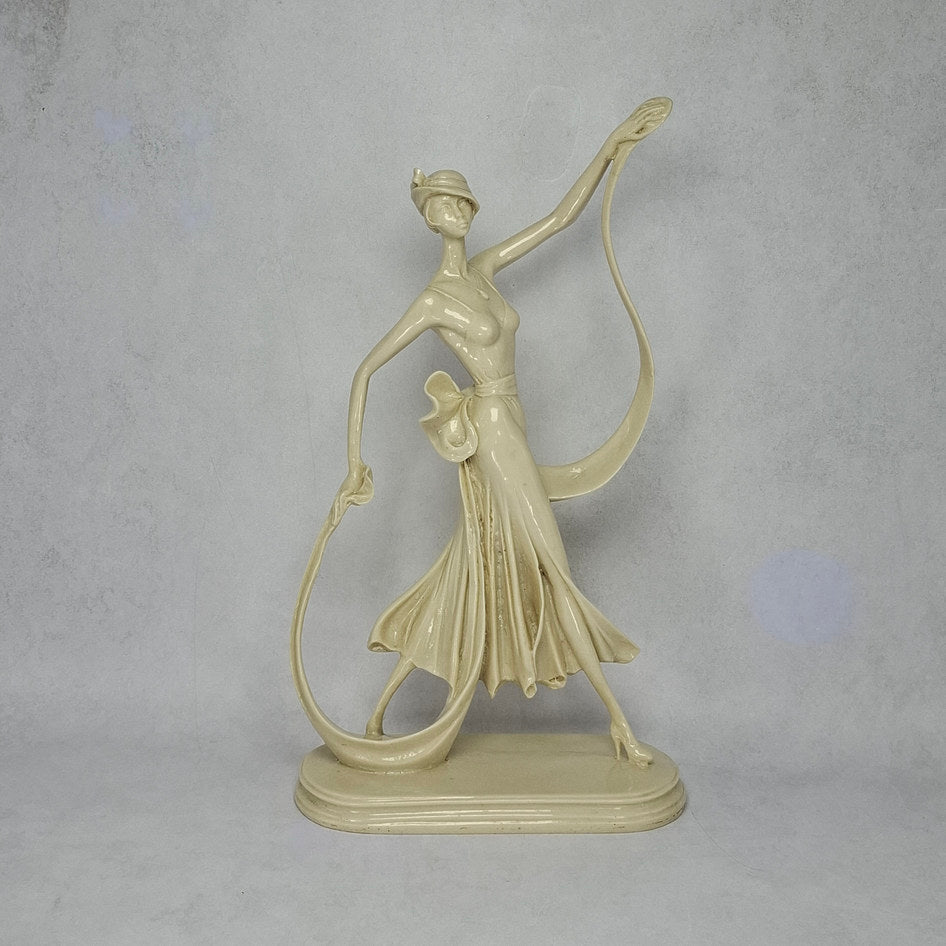
Art Deco figurines often show elegant, stylised figures. Dancers, ladies in fashionable dress, animals, and theatrical poses were popular subjects. The human figure in Art Deco design is often elongated, graceful, and simplified. Animal figures can also show Art Deco influence: panthers, deer, birds, dogs, and other animals shown in streamlined or highly stylised forms.
The Art Deco-Style Cream Lady Figurine with Flowing Ribbon Detail is a good example of the stylised figure work typical of the period. Browse the Figurines collection and Ornaments collection for more decorative figure work.
How to Identify Art Deco Items
When identifying an Art Deco item, start with the overall impression. Ask these questions: Does the piece look geometric, streamlined, or stylised? Does it have strong symmetry? Does it use bold colour contrast? Does it include fan, sunburst, chevron, or stepped motifs? Does the shape feel modern rather than Victorian or Edwardian? Does the mark or maker fit the 1920s or 1930s period?
A piece does not have to be expensive or famous to show Art Deco influence. Many everyday items from the 1920s and 1930s used Art Deco styling because the look became fashionable across homewares, interiors, and design.
Art Deco or Art Deco Style?
This is an important distinction for collectors. An item made during the Art Deco period, usually the 1920s or 1930s, can be described as Art Deco if the design supports it. An item made later but inspired by the period should be described as Art Deco style. When the exact date is not known, safer wording includes: Art Deco style, Art Deco inspired, in the Art Deco taste, or likely Art Deco period where supported by mark and form.
What to Check Before Buying Art Deco Pieces
Condition is very important when collecting Art Deco ceramics and glass. For ceramics, check for chips, cracks, crazing, staining, restoration, paint loss, and glaze wear. For glass, check for chips, cracks, bruises, clouding, heavy scratches, and rim damage. Marks are also important. A maker's mark, pattern name, registration number, or country mark can help date and identify a piece. All pieces in the Collectibles by Deon Art Deco collection are described with condition notes and period information to help collectors make informed decisions.
Styling Art Deco Pieces at Home
Art Deco pieces are easy to style because they have strong visual character. A ceramic vase can be placed on a mantel, sideboard, or bookshelf. A glass bowl can catch light in a cabinet or on a console table. A figurine can become a focal point in a small display. Art Deco works especially well with mirrors, black accents, brass or chrome details, velvet textures, clear and coloured glass, geometric ceramics, dark wood, and cream, gold, green, amber, and jewel tones.
The Harrach Basalt Glass Vase with Dancing Girl Motif makes a striking standalone display piece, while the complete Elsterwerda M65 set creates a cohesive period tableware grouping. Browse the Art Deco collection, Vases collection, and Figurines collection for curated period pieces, or contact us with any questions.
The About Us page introduces Collectibles by Deon.