South Africa has a wonderfully layered antiques and vintage market. English bone china, European glassware, Dutch-inspired ceramics, local studio pottery, silverware, brass, figurines, and decorative objects all appear through estate sales, auctions, private collections, and curated online stores. For a new collector, that variety can feel exciting, but also overwhelming.
The best way to begin is not to buy everything that catches your eye. It is to choose a category, learn what makes a good example, and build slowly. This guide will help you do exactly that.
Why South Africa Is Such an Interesting Collecting Market
South African homes have long reflected a mix of British, Dutch, European, Asian, and local decorative influences. The Dutch East India Company (VOC) made the Cape a transit point for Asian goods from the seventeenth century onward. British colonial settlement brought English bone china, transferware, and silverware into South African households in large quantities. And local potteries, from Lucia Ware in Olifantsfontein to Crescent Potteries on the East Rand, produced distinctly South African wares that are now actively collected in their own right.
That is why collectors in South Africa may find Royal Albert tea pieces, Delft-style ceramics and authentic Dutch Delftware, Chinese blue and white porcelain, Carnival Glass, Art Glass, South African studio pottery, and inherited silverware in the same market. This mix creates genuine opportunity for the informed collector.
Main Categories Worth Exploring
A good beginner collection often starts with one of these areas. Each has its own history, its own makers, and its own community of collectors in South Africa.
English Bone China and Transferware
English bone china from makers like Royal Doulton, Wedgwood, Royal Albert, Aynsley, and Beswick arrived in South Africa in large quantities through the colonial period and continues to appear at estate sales and auction houses. Transferware, particularly Blue Willow and related printed patterns, is one of the most accessible entry points for new collectors, with pieces still found at reasonable prices across the country. Read our dedicated guide to transferware and Blue Willow for more detail.
Blue and White Ceramics
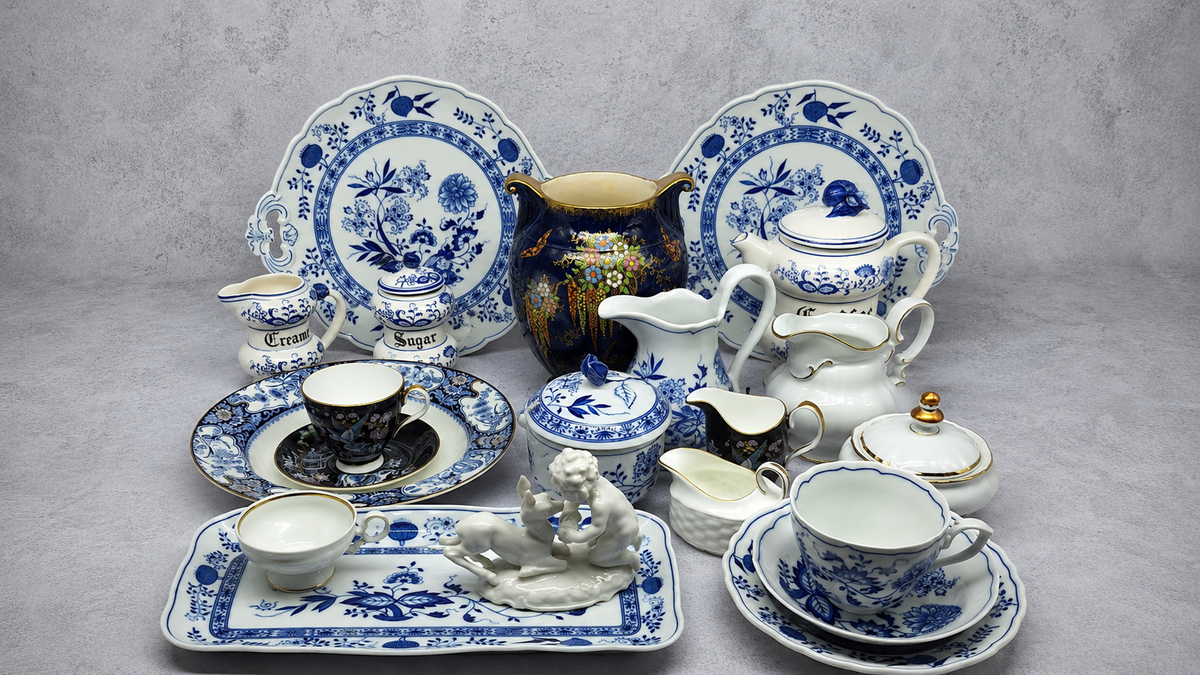
The Blues and Whites category spans Chinese export porcelain, Dutch Delftware, English transferware, and Japanese blue and white, all of which appear regularly in the South African market. It is a broad and rewarding collecting area with pieces available at every price point.
Oriental Ceramics
Chinese export porcelain, Famille Rose, Imari ware, and Japanese ceramics all turn up regularly in South African collections, often with interesting local histories attached to them. The Oriental collection at Collectibles by Deon covers the main styles you are likely to encounter. Read our guide to Imari and Oriental ceramics for a full introduction to the category.
Art Glass and Glassware
Art Glass from makers like Murano, Mdina, and Bohemian glasshouses appears in South African collections alongside Carnival Glass, crystal and cut glass, and decorative glass vases. Carnival Glass in particular, with its iridescent pressed glass patterns from makers like Fenton, Imperial, Northwood, and Dugan, is a well-established collecting category with a strong international reference base. Read our complete guide to Carnival Glass for more.
Figurines
Figurines from makers like Royal Doulton, Beswick, Royal Albert, and Belleek are among the most actively collected categories in South Africa. Lady figurines, animal studies, and character figures all have dedicated collector communities, and pieces appear regularly at local auction houses.
South African Ceramics
South African studio and commercial pottery is an increasingly recognised collecting category. Lucia Ware, Drostdy, Crescent Potteries, Kalahari Pottery, and studio potters like Clementina van der Walt and Jan du Toit all produced distinctive wares that are now actively sought by collectors who want pieces with a specifically local story. Read our guide to South African pottery makers for a full introduction.
Silverware and Metalware
Silverware and brass and metalware appear regularly at South African estate sales, often as part of household dispersals. Hallmarked silver from British makers is the most reliably documented category, with hallmarks providing verifiable information about maker, date, and assay office.
Decorative Ceramics: Tobies, Steins, and Ornaments
Toby jugs and character steins are a specialist collecting area with a dedicated following. Decorative ornaments and ceramic vases offer entry points at a wide range of price points and suit collectors who want pieces that work in a living space as well as a collection.
What to Look For Before Buying
- Maker's mark or backstamp: the printed or impressed mark on the base of a piece is your most reliable identification tool. A clearly marked piece from a known maker is always preferable to an unmarked example.
- Condition: look for chips, cracks, repairs, crazing (a fine network of cracks in the glaze), cloudiness in glass, and gilding wear (fading or rubbing of gold decoration). Condition affects both value and long-term enjoyment.
- Photographs: when buying online, clear photographs of the base mark, any damage, and the piece from multiple angles are essential. A seller who provides these is being transparent about what they are selling.
- Dimensions: always check that dimensions are supplied. Scale is easy to misjudge from photographs alone.
- Description quality: a careful, specific description that names the maker, pattern, period, and condition is a good sign. Vague descriptions that rely on general terms like "antique" or "vintage" without specifics warrant more caution.
Focused Collecting Versus Buying Broadly
Many collectors begin broadly, then naturally develop a focus. You might start with anything blue and white, then refine your interest to Blue Willow, Delftware, Chinese export porcelain, or English transferware. A collector who starts with figurines might eventually focus entirely on Royal Doulton ladies, building a cohesive and recognisable collection around a single maker and subject.
A focused collection usually becomes stronger over time because each new piece adds to the story of the whole. It also makes it easier to develop genuine expertise, which is the best protection against buying incorrectly described or overpriced pieces.
Buying Antiques Online in South Africa
Online buying is now a practical way to build a collection, especially when the seller provides clear photographs, condition notes, measurements, and safe packaging. Because each piece is usually one of a kind, it is worth acting quickly when you find something right, but not without checking the details first.
For collectors who already source through auction houses and estate sales, a reputable online store offers a complementary channel, one where pieces are curated, described carefully, and available without the pressure of a bidding room. At Collectibles by Deon, each listed piece is individually photographed and described so that you can browse with confidence.
Building Knowledge Alongside Your Collection
- Read maker-specific collector guides. The Collectibles by Deon Journal covers the main categories you will encounter in the South African market, with articles on Carnival Glass, Oriental ceramics, transferware, South African pottery, and more.
- Attend previews at houses like Strauss and Co, Stephan Welz, and Bernardi's, where you can handle pieces and compare examples before bidding.
- Use established reference books. For Royal Doulton figurines, the Charlton Standard Catalogue is the standard reference. For Carnival Glass, the Standard Encyclopedia of Carnival Glass by Bill Edwards and Mike Carwile is the most widely used guide.
- Join collector communities. South African collector groups on social media and at antique fairs are a practical source of local knowledge and market pricing.
Start Your Collection
Browse the current Collectibles by Deon collections and find a piece with history, character, and presence. Start with the category that genuinely attracts you, whether that is South African ceramics, Carnival Glass, Blue Willow transferware, figurines, or Art Glass. Check New Arrivals for recently sourced estate pieces, or contact us if you are looking for something specific. You can also learn more about the store and how each piece is sourced and described.