
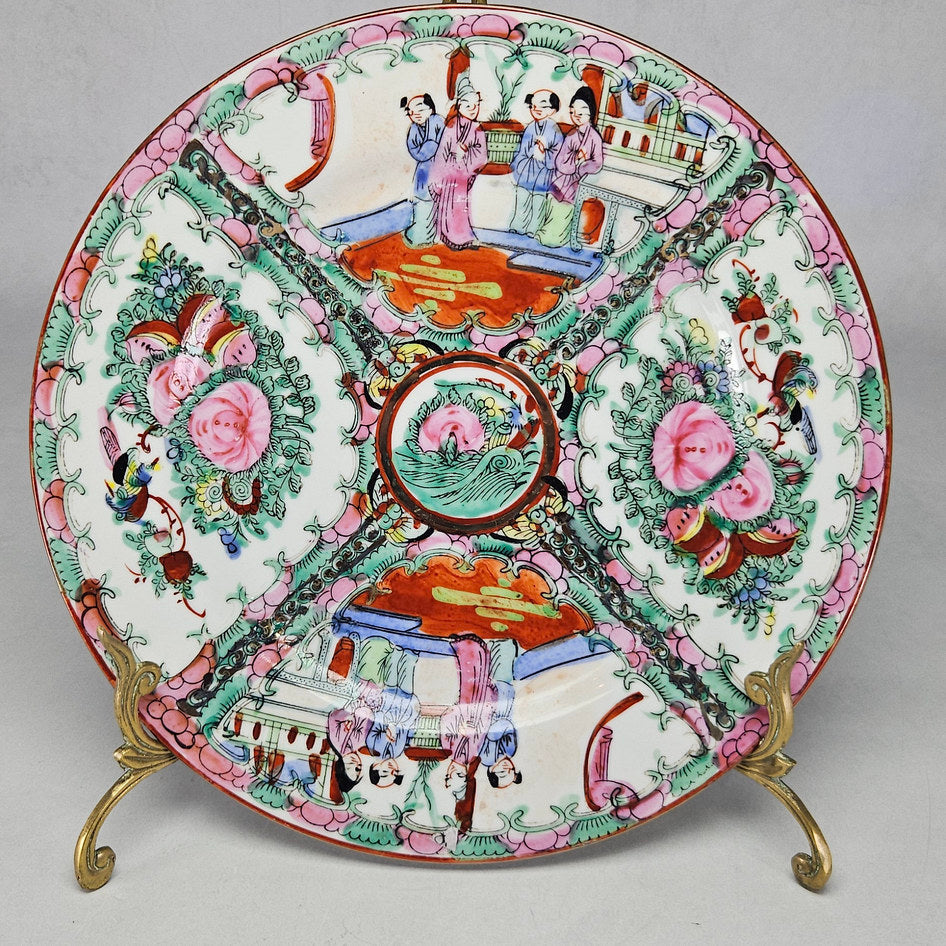
If you have ever picked up a plate decorated with rich reds, deep blues, and gilded detail and wondered where on earth it came from and what it is worth collecting, you are not alone. Oriental ceramics are one of those categories that draws people in slowly, often starting with a single piece inherited from a grandparent or spotted at a flea market in Joburg or Cape Town, and before long you find yourself down a very rewarding rabbit hole.
This guide covers the main styles you are likely to encounter when collecting Oriental and Imari-influenced ceramics, what to look for, and how to tell the difference between a genuine antique piece and a later decorative reproduction.
What Are Oriental Ceramics?
The term "Oriental ceramics" is a broad collector's category that covers porcelain and pottery produced in China, Japan, and Korea, as well as pieces made in other countries that imitate or draw on East Asian decorative traditions. In the South African antiques market, the pieces most commonly encountered fall into a handful of well-defined styles: blue and white Chinese export porcelain, Famille Rose, Imari, and Chinoiserie-influenced wares made in Europe or other countries for the export trade.
Blue and White Chinese Export Porcelain
Blue and white porcelain is the style most South African collectors encounter first. It is produced by painting cobalt blue decoration onto white porcelain before glazing and firing, which fuses the decoration permanently into the surface. The tradition dates to the Tang Dynasty (618 to 907 AD) in China, though the classic blue and white export style associated with collector pieces today developed primarily during the Ming Dynasty (1368 to 1644) and continued through the Qing Dynasty (1644 to 1912).
Chinese export porcelain was produced specifically for foreign markets, including Europe, the Middle East, and Southeast Asia. Pieces were often decorated with landscapes, figures, floral motifs, and architectural scenes. The Blue and White Geometric Floral Lidded Ginger Jar and the Blue and White Chinese Porcelain Prunus Cracked Ice Ginger Jar in the Collectibles by Deon collection are classic examples of this tradition. The prunus blossom on a cracked ice ground is one of the most recognisable motifs in Chinese export ware, associated with the arrival of spring and widely used on ginger jars from the Kangxi period (1661 to 1722) onward.
The Blue and White Square Porcelain Bowl with Floral Scroll Decoration and the Chinese Export Blue and White Figural Landscape Plate with Chenghua Style Mark are further examples. A note on reign marks: the presence of a Chenghua, Qianlong, or other reign mark on a piece does not confirm that it was made during that reign. The practice of adding earlier reign marks as a mark of respect or aspiration was common throughout Chinese ceramic history and is well documented. Marks should be assessed alongside the style, body, and glaze of the piece rather than taken at face value.
The collection also includes a number of blue and white pieces that illustrate the breadth of the tradition. The Blue and White Chinoiserie-Style Japanese Scene Ceramic Jug, the Blue and White Porcelain Koi Design Pot, the Tall Blue and White Porcelain Rectangular Blossom Tree Vase, the Decorative Blue and White Porcelain Ribbed Lidded Jar, and the Living Art Azure Blue and White Lidded Bowl each demonstrate how the blue and white aesthetic has been interpreted across different periods and origins. The Cobalt Blue and White Ceramic Duck-Shaped Lidded Tureen is a charming example of the figurative blue and white tradition.
Famille Rose
Famille Rose is a style of Chinese export porcelain characterised by a palette that includes an opaque pink enamel derived from colloidal gold, alongside greens, yellows, and other colours. The style was developed during the Yongzheng period (1722 to 1735) and became the dominant export palette through the Qianlong period (1735 to 1796) and beyond.
The Chinese Export Famille Rose Court Procession Plate with Qianlong Style Mark, the Chinese Export Famille Rose Figural Plate with Qianlong Style Mark, the Chinese Export Famille Rose Cockerel and Floral Plate with Qianlong Style Mark, and the Chinese Export Famille Rose Floral Butterfly Longevity Plate in the Oriental collection are all representative of this tradition. The Rose Medallion style, seen in the Chinese Export Famille Rose Rose Medallion Figural Floral Plate, is a specific Famille Rose variant featuring alternating panels of figures and flowers arranged around a central medallion, produced extensively for the Western export market from the nineteenth century onward.
Later Famille Rose production from Hong Kong and Macau continued the tradition into the twentieth century. The Chinese Export Famille Rose Floral Plate with Qianlong Style Mark, the Macau Famille Rose Floral and Butterfly Plate, the Macau Made Famille Rose Pierced Rim Decorative Plate, the Hong Kong Wah Lee Hua Li Factory Famille Rose Rose Medallion Plate, and the Pair of Chinese Porcelain Famille Rose Sleeve Vases with Dragon Motifs are honest examples of later export production, decorative and collectable in their own right.
Imari Ware
Imari is a style of porcelain originally produced in the Arita region of Japan and exported through the port of Imari from the late seventeenth century. It is characterised by a rich palette of underglaze blue, overglaze iron red, and gilding, often combined with floral and figural decoration. The style was so popular in Europe that Chinese potters began producing their own versions for the export market, known as Chinese Imari, and European factories including Meissen, Worcester, and Derby produced their own Imari-inspired patterns.
English examples illustrate that distinction: a Royal Crown Derby pattern 2649 cup and saucer has matching factory marks, while an Imari-style pair retailed by Alfred B. Pearce has London retailer marks but no identified porcelain manufacturer. The Derby Crown Porcelain pattern 190 side plate is another English interpretation. These are Imari-inspired English pieces, not Japanese Arita porcelain.
The COCEMA Taous Peacock Imari-Style Moroccan Porcelain Vase in the collection is an interesting example of how the Imari aesthetic travelled well beyond Japan and China. COCEMA was a Moroccan state ceramics enterprise, and this piece demonstrates how the Imari colour palette and decorative vocabulary was adopted and reinterpreted in a completely different cultural context, making it a genuinely unusual collector's piece.
Chinoiserie and Later Export Wares
Not all Oriental-style ceramics were made in China or Japan. Chinoiserie refers to the Western interpretation of East Asian decorative motifs, produced in Europe and elsewhere from the seventeenth century onward. The Occupied Japan Blue and White Chinoiserie Plate is a documented category of its own: pieces marked "Made in Occupied Japan" were produced between 1945 and 1952, during the Allied occupation of Japan following the Second World War. The marking was required by American occupation authorities on goods exported to the United States, making it a historically specific and verifiable date range for any piece carrying the mark.
The Chinese Chinoiserie Blue Willow Shard Box Set of 9 is a distinctive collector's piece made from fragments of antique blue and white porcelain, appealing to collectors who appreciate the history embedded in each shard. The Japanese Kintetsu Real Estate Futakami Fantasy Decorative Plate is an unusual piece of Japanese commemorative ware, of interest to collectors who enjoy the more eccentric corners of the export ceramics market.
Blue and White Transferware in the Oriental Tradition
The blue and white aesthetic was not limited to Chinese and Japanese production. British potteries adopted and adapted Oriental motifs extensively, producing transferware patterns that drew on Chinese landscape, willow, and floral traditions. The Churchill Blue Willow Dinner and Charger Plate Set and the Churchill Blue Willow Tall Ceramic Tea Mug are modern Churchill productions of the enduring Willow pattern. The Staffordshire Chef Ware Blue and White Striped Vinegar Jar and the Wood and Sons Oriental Bird Blue and White Tea Cup and Saucer are further examples of British blue and white in the Oriental tradition. The Villeroy and Boch Blue Onion Porcelain Oval Platter represents the Continental European interpretation of the blue and white tradition, with the Blue Onion pattern having been produced by Meissen from the eighteenth century and widely copied thereafter.
Celadon and Related Glazed Wares
Celadon glazes, characterised by their soft grey-green tones, represent one of the oldest and most refined traditions in East Asian ceramics. The Chinese-Style Celadon Crane Motif Covered Bowl illustrates how the celadon aesthetic continues to be interpreted in decorative ceramics today.
Portmeirion and the British Interpretation of Oriental Design
Portmeirion Pottery, founded by Susan Williams-Ellis in Wales, drew extensively on historical ceramic traditions including Oriental and botanical sources. The Portmeirion Botanic Garden White Ceramic Bowl, the Portmeirion British Heritage Collection Parian Ware Creamer, and the Portmeirion Magic City Aztec Motif Plate each represent different periods and design directions within the Portmeirion range, from the naturalistic Botanic Garden to the bold geometric Magic City pattern of the 1970s.
Japanese Ceramics
Japanese ceramics beyond the Imari tradition are equally collectable. The Vintage Japanese Peacock and Floral Ceramic Lidded Trinket Box is a good example of the detailed hand-painted decoration associated with Japanese export ware, the kind of piece that displays beautifully and holds its appeal across generations of collectors.
Korean Ceramics
Korean ceramics have a distinct tradition separate from both Chinese and Japanese production, particularly noted for refined celadon glazes and elegant forms. The Litan Dynasty Korea 16th Century Imperial Collection Bamboo Vase in the collection references this Korean ceramic tradition and offers collectors something genuinely different from the more commonly encountered Chinese and Japanese export wares.
What to Look For When Collecting
Oriental ceramics is a broad and deep field, and building knowledge takes time. A few practical starting points for South African collectors:
- Reign marks: the presence of a reign mark does not confirm the period of production. Treat marks as one piece of evidence among several, not as definitive proof of age.
- Body and glaze: genuine antique Chinese porcelain typically has a fine, dense body and a glaze that shows age-appropriate wear at the foot rim. Later reproductions are often heavier or show a more uniform, glassy glaze.
- Enamel quality: on Famille Rose pieces, look at the quality and depth of the pink enamel. On genuine eighteenth and nineteenth century pieces, the enamel has a characteristic softness and depth that is difficult to replicate in later production.
- Condition: chips, hairline cracks, and restoration all affect value. Examine pieces carefully in good natural light, and run a finger around the rim and foot rim to feel for repairs.
- Provenance: pieces with a documented history, whether from a known collection, estate, or auction record, carry more confidence for the serious collector.
Oriental Ceramics in South Africa
Oriental ceramics arrived in South Africa through several routes: the Dutch East India Company (VOC) trade, which made the Cape a significant transit point for Asian goods from the seventeenth century onward; British colonial household imports; and the personal collections of settlers, traders, and missionaries. As a result, Chinese export blue and white, Famille Rose, and Imari-style pieces turn up regularly at South African estate sales and auction houses, often with interesting local histories attached.
The Collectibles by Deon Oriental collection brings together a curated selection of these pieces, from Chinese export plates and ginger jars to Japanese trinket boxes and Imari-influenced wares. You are also welcome to explore the Blues and Whites collection for further blue and white porcelain, or browse all ceramics. If you have a question about a specific piece or its origins, visit our contact page or learn more about the store.
Frequently Asked Questions
What is the difference between Imari and Famille Rose?
Imari ware originates from the Arita region of Japan and is characterised by underglaze blue, overglaze iron red, and gilding. Famille Rose is a Chinese export style defined by its opaque pink enamel palette, developed during the Yongzheng period in the early eighteenth century. Both styles were widely exported to Europe and influenced Western ceramic production.
What does a reign mark on Chinese porcelain mean?
A reign mark identifies the emperor during whose reign a piece was made, or whose reign the maker wished to honour. The practice of adding earlier reign marks as a sign of respect was common throughout Chinese ceramic history, so a reign mark alone does not confirm the age of a piece. Assessment of the body, glaze, and decoration is necessary alongside the mark.
What is Chinese export porcelain?
Chinese export porcelain refers to ceramics produced in China specifically for foreign markets, particularly Europe, the Middle East, and Southeast Asia. It was produced in large quantities from the Ming Dynasty onward and includes blue and white, Famille Rose, Famille Verte, and Imari-style wares.
What does "Occupied Japan" mean on a ceramic piece?
Pieces marked "Made in Occupied Japan" were produced between 1945 and 1952, during the Allied occupation of Japan following the Second World War. The marking was required by American occupation authorities on goods exported to the United States, making it a historically specific and verifiable production period.
What is Chinoiserie?
Chinoiserie refers to the Western interpretation and imitation of East Asian decorative motifs and styles, produced in Europe and elsewhere from the seventeenth century onward. It is distinct from genuine Chinese or Japanese production, though the two are sometimes confused.
Where can I find Oriental ceramics in South Africa?
Oriental ceramics appear regularly at South African estate sales, auction houses, and specialist antique dealers. Pieces range from affordable later export wares to genuinely rare antique examples. The Collectibles by Deon Oriental collection offers a curated selection with verified descriptions for each piece.
A fascinating category for collectors of Chinese export porcelain, blue and white ceramics, or decorative Asian ceramics with a story worth knowing. Browse the Oriental collection to explore available pieces, or get in touch if you would like more information about a specific item.