
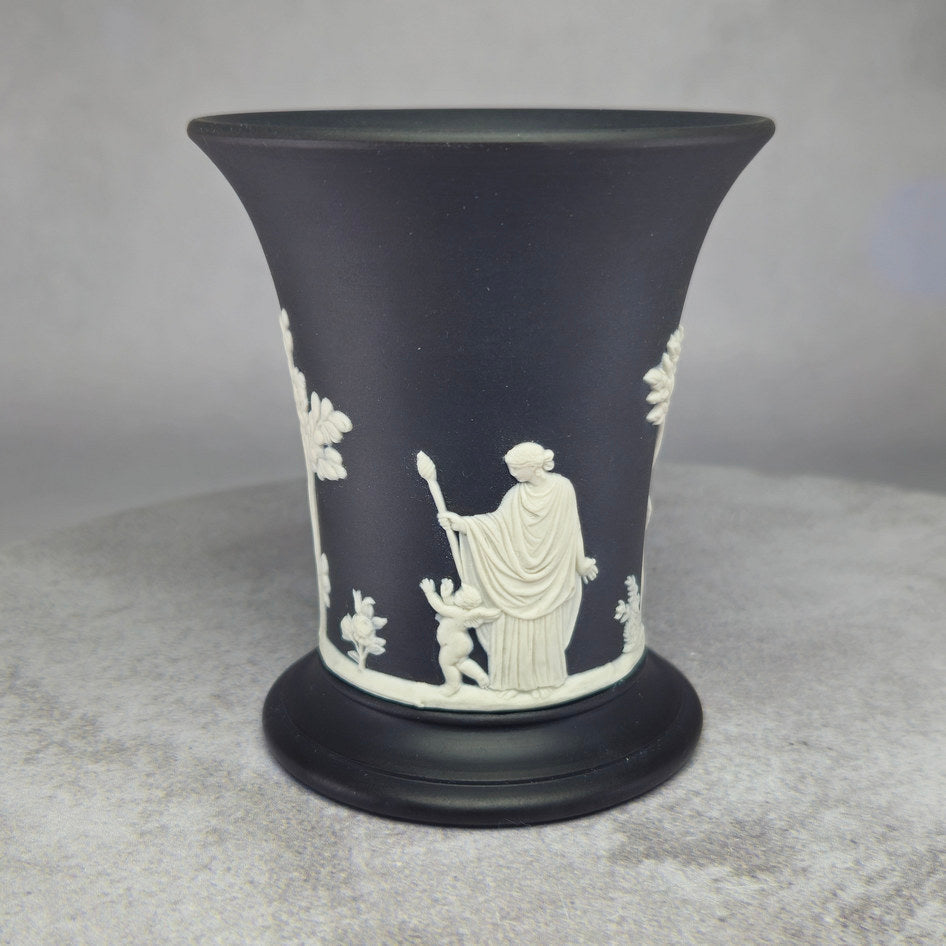
Wedgwood Jasperware is one of the most recognisable ceramic inventions in British design history. Most collectors immediately think of the classic pale blue with white relief decoration, but black Wedgwood pieces have their own striking presence. Black Jasperware has a formal, dramatic and almost cameo-like quality. The contrast between a matte black ground and white classical relief creates a crisp sculptural effect, while gold on black examples bring a warmer, more decorative look. Browse the full Wedgwood collection at Collectibles by Deon to see the pieces currently available.
What is Wedgwood Jasperware?
Jasperware was developed by Josiah Wedgwood in the 1770s and became one of the company's most famous ceramic bodies. It is usually recognised by its matte, unglazed surface and applied relief decoration. The reliefs are often white and are applied to a coloured body, creating a cameo effect similar to carved gemstone or ancient cameo glass. Typical Jasperware colours include pale blue, dark blue, green, lilac, yellow and black. The most famous colour is Wedgwood blue, but black Jasperware has a more dramatic, classical appearance.
Why black Jasperware is so striking
Black Jasperware changes the mood of the design. On blue Jasperware, the white relief often feels soft, elegant and decorative. On black Jasperware, the same relief becomes sharper and more architectural. Classical figures, borders, garlands, urns and mythological scenes stand out clearly against the dark ground. This black and white contrast connects strongly with Wedgwood's neoclassical inspiration and recalls ancient cameo glass, carved cameos and classical relief sculpture. For collectors, black Jasperware is especially appealing because it works well in both traditional and modern interiors. It feels historic, but also clean and graphic.
The Portland Vase connection
One of the most important objects in Wedgwood history is the Portland Vase. The original Portland Vase is an ancient Roman cameo glass vessel with a dark ground and pale relief decoration. Josiah Wedgwood spent years developing a ceramic version of it, and his black and white Jasperware copy became one of the great technical and artistic achievements of the factory. This shows how important the black and white effect was to Wedgwood's identity. Black Jasperware was not just another colour variation. It connected directly to the classical world that inspired much of Wedgwood's most admired work.
Black Jasperware and black basalt
Collectors should be aware of an important distinction. A black Wedgwood piece with white applied relief may be black Jasperware. A solid black Wedgwood piece with no applied relief may be black basalt. Black basalt is another important Wedgwood ceramic body, developed before Jasperware and used for classical forms, portrait medallions, vases, busts and decorative objects. It has a dense, black, stone-like appearance designed to echo ancient sculpture and classical taste. This means a pure black Wedgwood piece in your collection may not be Jasperware at all. The best approach is to examine the mark, surface, body, decoration and form before assigning the exact description.
White on black Wedgwood Jasperware
White on black is one of the most classic and dramatic Jasperware combinations. The white relief decoration usually shows neoclassical subjects: figures, gods and goddesses, muses, cherubs, urns, laurel borders, grapevine motifs, floral swags or classical scenes. The appeal lies in the contrast. The white relief appears almost sculpted against the black background, making even small pieces visually strong. Current examples in the collection include the Wedgwood Black Jasperware Trumpet Vase with Neoclassical Relief, the Wedgwood Black Jasperware Fluted Aurora Relief Tray, the Wedgwood Black Jasperware Club-Shaped Neoclassical Relief Dish, the Wedgwood Black Jasperware Rectangular Neoclassical Relief Jewellery Dish and the Wedgwood Black Jasperware Kidney-Shaped Lidded Trinket Dish with Cupid as the Oracle Relief.
White on black Jasperware works beautifully in a cabinet, on a mantel or grouped with other monochrome ceramics. It also pairs well with silver, crystal, black basalt, white porcelain and framed classical prints. The Wedgwood Black Jasperware Grapevine Relief Ashtray and the Wedgwood Black Jasperware Round Grape and Vine Ashtray are good examples of the grapevine motif, one of the most enduring decorative themes in the Jasperware range.
Gold on black and terra cotta on black Wedgwood pieces
Gold on black and terra cotta on black Wedgwood pieces should be catalogued carefully. The Wedgwood Gold on Black Jasperware Lidded Pill Box with Cherub Relief Figure and the Wedgwood Terra Cotta on Black Jasperware Planter Pot with Egyptian Relief Figures show how the black ground can work with different relief colours to create very different effects. For product descriptions, careful wording is best. Describe what is visible: black Wedgwood body, the relief colour, applied relief if present, backstamp, form and condition.
How to identify black Wedgwood Jasperware
Start with the base. Look for the Wedgwood mark, country of origin wording, impressed marks, printed marks, date codes or model numbers. Next, look at the body. Jasperware usually has a matte, unglazed surface and applied relief decoration. The surface should not look like shiny glazed porcelain. Then examine the relief. White applied relief is one of the key identifying features of Jasperware. It should sit raised above the ground and show crisp moulded detail. Black Jasperware often appears in boxes, vases, dishes, plaques, trays, bowls, cameos, trinket pieces, jewellery and commemorative objects.
Dating black Wedgwood pieces
Dating Wedgwood can be complex because the company used many marks over a long period. A piece marked Wedgwood alone may be earlier than one marked Wedgwood England or Made in England, but this is only a general guide. Some date codes, impressed letters, pattern numbers and factory marks can help narrow the period. Collectors should avoid assigning an exact year unless the mark clearly supports it. Safer wording includes 19th century where supported by the mark and form, early 20th century where supported by the mark, mid 20th century, late 20th century, vintage Wedgwood or modern Wedgwood. For product listings, accuracy is more important than overstatement.
What to look for when collecting
Condition is very important with black Jasperware. Check carefully for chips, cracks, restoration, staining, rubbing, missing relief, damaged sprigging and surface marks. White relief decoration can sometimes show dirt or wear, especially in fine details. On black pieces, scratches or scuffs can be more visible than on lighter colours. Check the surface under good light and inspect rims, lids, corners, handles and raised decoration. For boxes and lidded pieces, check that the lid fits correctly and belongs to the base. For vases and decorative objects, check the rim and foot carefully.
Is black Wedgwood Jasperware rare?
Black Wedgwood Jasperware should not automatically be described as rare. Wedgwood produced Jasperware for a long period and in many colours, forms and editions. However, black examples are highly collectable and can feel less familiar than the more common Wedgwood blue. Some individual black pieces may be less commonly encountered, especially unusual forms, early examples, limited editions, discontinued designs, strong condition pieces or items with distinctive decoration. The safest wording is collectable, distinctive, less commonly encountered, early where supported, or rare only where a specific piece has verified evidence.
Styling black Wedgwood at home
Black Wedgwood is very easy to style. A single piece can make a quiet statement on a shelf or side table. A group of black Jasperware and black basalt pieces can create a strong monochrome display. Black Wedgwood pairs well with white porcelain, silverplate, crystal, dark wood, classical prints, blue Jasperware, gold accents, black framed artwork and cream ceramics. For a modern display, use a few pieces with space around them. For a traditional cabinet, group by form, such as vases, boxes, dishes and plaques.
Why this collection is worth showcasing
A collection of black Wedgwood pieces is worth showcasing because it tells a slightly different Wedgwood story. It moves beyond the familiar blue and highlights the dramatic side of Jasperware and basalt. White on black pieces show Wedgwood's classical relief decoration at its sharpest. Pure black pieces connect to the sculptural tradition of black basalt. Gold on black pieces add decorative richness and contrast. Together, these pieces offer collectors a beautiful view of Wedgwood's design language: classical, refined, inventive and timeless.
If you enjoy British ceramic collector guides, you may also find our articles on Aynsley Pembroke Bone China: History, Design and Collector Appeal and Royal Albert Teddy Bear Tales: A Gentle Collector Series in Bone China of interest.
Explore the black Wedgwood selection at Collectibles by Deon and discover elegant Jasperware and related Wedgwood pieces chosen for collectors, decorators and lovers of timeless British ceramic design. For enquiries about specific pieces or availability, visit the Contact page.