
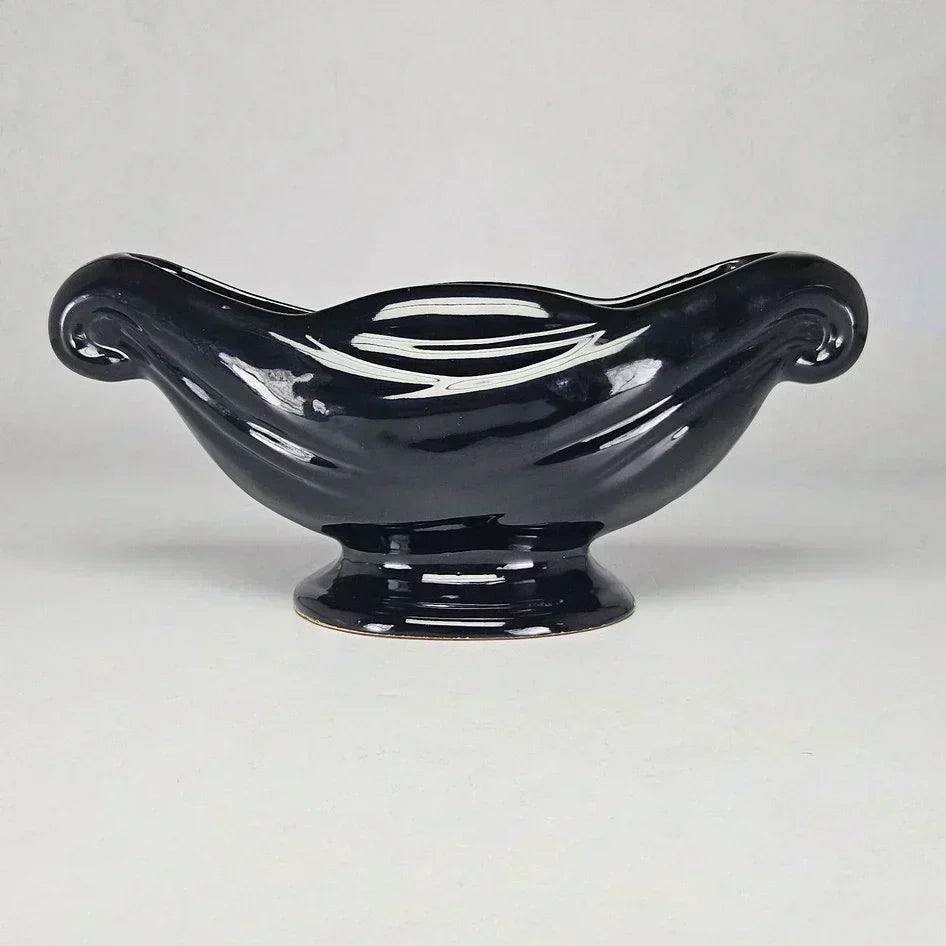
Lucia Ware holds a quiet but firm place in South African ceramic history. Known for its rich glazes, decorative shapes and unmistakable mid-century character, it remains one of the most recognisable names in locally produced vintage pottery and one of the most enjoyable to collect.
What is Lucia Ware?
Lucia Ware is a South African ceramic range associated with Boksburg East Potteries. Museum-held examples identify it as glazed earthenware produced domestically during the mid-20th century. The range spans decorative vases, planters, servers, ornaments and animal figures. Many pieces were produced in strong single-colour glazes, with green, burgundy, black, yellow and blue among the most common, while others carry hand-painted or applied decorative detail. This variety is part of what makes Lucia Ware so satisfying to collect. Each piece feels individual while remaining clearly part of the same ceramic family. Browse the South African Ceramics collection to see current pieces.
A brief history
Lucia Ware emerged during an active period in South African ceramic production, when local potteries were supplying decorative wares for everyday homes. These were not purely utilitarian pieces. Vases, mantel ornaments, animal figures and planters were made to add colour and personality to domestic interiors, and they did exactly that. That original purpose is part of what gives Lucia Ware its lasting appeal. It captures a moment in South African design history when ceramics were accessible, decorative and full of character. These pieces were made to be lived with, displayed and enjoyed, and they still are.
Why collectors seek it out
South African heritage. For local collectors, Lucia Ware is part of the country's mid-century decorative arts story. It sits comfortably alongside other South African pottery names and has become increasingly appreciated as interest in locally made vintage ceramics grows. The broader story of South African studio and factory ceramics is explored in our South African Pottery Makers: A Collector's Guide to Local Ceramics.
Visual distinctiveness. The glazes are bold, glossy and easy to display. A single piece like the Lucia Ware Black Ceramic Mantel Vase Style 5803 can anchor a shelf or mantelpiece with real presence. The forms are equally strong, from elegant vases to sculptural planters and playful animal figures.
Variety within a range. Some collectors focus on colour, others on particular shapes, model numbers or animal forms. That variety keeps collecting interesting. The Green Ceramic Gondola Planter, the Green Ceramic Ribbon Vase Style 4307 and the Light Blue Double-Handled Vase Style 2101 each show how different the same maker can look across shapes and glazes.
Nostalgic familiarity. Many South African collectors remember seeing Lucia Ware in family homes, on sideboards, in display cabinets, as part of older household decor. That sense of familiarity gives these pieces emotional resonance alongside their decorative value.
What to look for
Marks. Many Lucia Ware pieces carry an impressed or stamped mark, sometimes accompanied by a shape or model number. These markings assist with identification and add interest for the more systematic collector.
Glaze quality. Lucia Ware is appreciated for its rich colour and glossy finish. Look for pieces where the glaze is even, well-saturated and suits the form. The Yellow Ceramic Gondola Planter and the Yellow Ceramic Miniature Pitcher Style 1303 are good examples of how Lucia Ware's softer palette works just as well as its bolder tones.
Form. Ribbed vases, curved planters, fish designs, animal figures and mantel vases are all popular because they display beautifully. The fish planter is one of the most distinctive Lucia Ware forms, with examples showing how the same shape was produced in different glazes and finishes. The gondola planter is another signature shape, available in the Green Ceramic Gondola Planter, Yellow Ceramic Gondola Planter, Large Green Gondola Planter Style 6008 and Large Black Gondola Planter Style 6008.
Condition. As with all vintage ceramics, examine the rim, base, handles and any raised detail carefully. Clear photographs from multiple angles are essential when buying online. A well-presented piece in honest condition is always preferable to one where condition is unclear.
Animal figures and ornaments
Lucia Ware animal figures are among the most charming pieces in the range. The White Ceramic Scottish Terrier Dog Figurine is a good example of the playful, characterful figure work that Lucia Ware produced alongside its vase and planter range. These smaller pieces suit display cabinets and collector shelves, adding charm without overwhelming a space.
Other South African studio ceramics
South African ceramic production extended well beyond Lucia Ware. Clementina van der Walt is one of the country's most celebrated contemporary studio potters, known for her vivid, hand-painted earthenware. The Ardmore Hand-Painted Bird Egg Cup represents the Ardmore Ceramic Art studio in KwaZulu-Natal, which has produced hand-painted figurative ceramics since 1985. The Vintage White Bone China Bokkie Figurine is a charming example of locally produced bone china figurative work.
Styling Lucia Ware at home
Lucia Ware is versatile. It works in both vintage and contemporary interiors without demanding too much of the space around it. A single vase on a bookshelf, console table or mantelpiece reads as a confident colour accent. Green and burgundy pieces pair well with warm wood, brass and framed art. The Black Mantel Vase Style 5803 creates a more dramatic effect alongside cream ceramics or clear glass. For collectors who enjoy mixing periods and styles, Lucia Ware sits comfortably alongside mid-century glass, studio pottery and Art Deco forms. Its colours and shapes are adaptable enough to hold their own in varied company.
Why it remains popular
Lucia Ware endures because it combines qualities collectors genuinely value: South African heritage, mid-century style, decorative colour and unpretentious charm. These are pieces that can be enjoyed in everyday spaces, not stored away. A Lucia Ware vase or planter brings warmth and character into a room while also telling part of South Africa's ceramic story. For new collectors, it is a rewarding starting point in South African pottery. For established collectors, it offers depth and the pleasure of finding different shapes, colours and forms over time.
Browse all current Lucia Ware pieces in the South African Ceramics collection at Collectibles by Deon. Each item is individually photographed and described so you can assess the form, colour, markings and condition before purchasing. See what has just arrived in the latest additions, or contact us with any enquiries. Learn more about the store and how each piece is sourced.
Related pieces in the collection
- Lucia Ware Yellow Ceramic Gondola Planter Vase